Where does rust attack a classic car?
On a monocoque car, the panels you see are only part of the story. Sills, chassis rails, floors and crossmembers form the structure: once they corrode, it is no longer a question of looks but of rigidity. Classic car body restoration therefore starts underneath, with the car on a lift.
The areas to inspect are much the same from one car to the next: jacking points, the joints between floor and sills, wheel arches where mud and moisture collect, the bottoms of wings and doors, the boot floor. Paint bubbling along a seam, or expanding foam hidden inside a sill, usually points to an old repair that will have to be redone.
Porsche 911s stand apart from the 1976 model year onwards, with a galvanised steel body: it resists far better, but a poorly protected repair creates a weak spot. For the marque’s particular points, see our page on Porsche bodywork.
Chemical stripping or blasting: how is a shell taken back to bare metal?
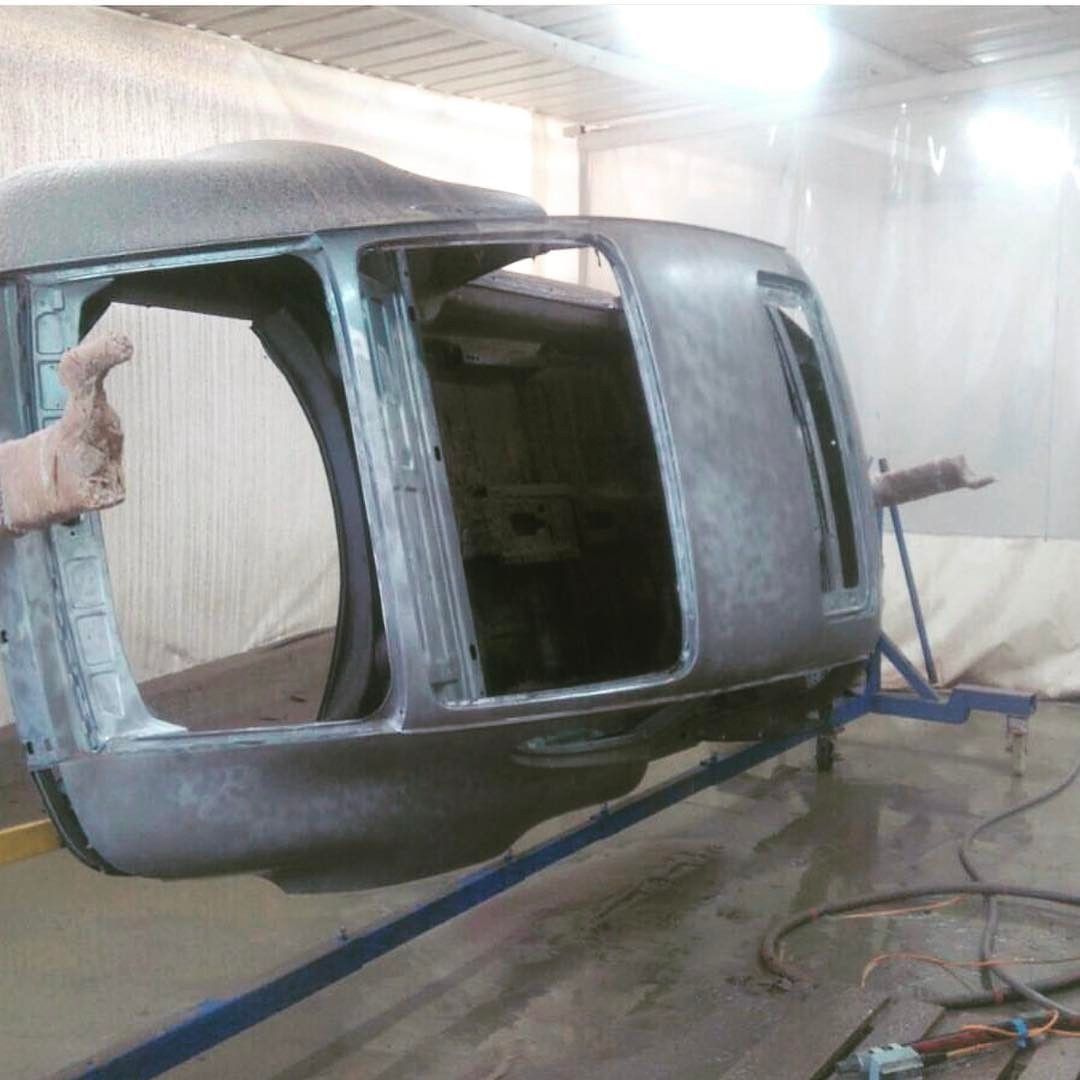
Taking a shell back to bare metal reveals the true condition of the steel. Chemical stripping dissolves paint, filler and rust, including inside box sections; it calls for careful rinsing and neutralising, then immediate protection, or the bare steel starts to oxidise. Blasting, with sand or a gentler medium, suits thick sections and the underside; on a large, thin panel it must be done with restraint so as not to distort it.
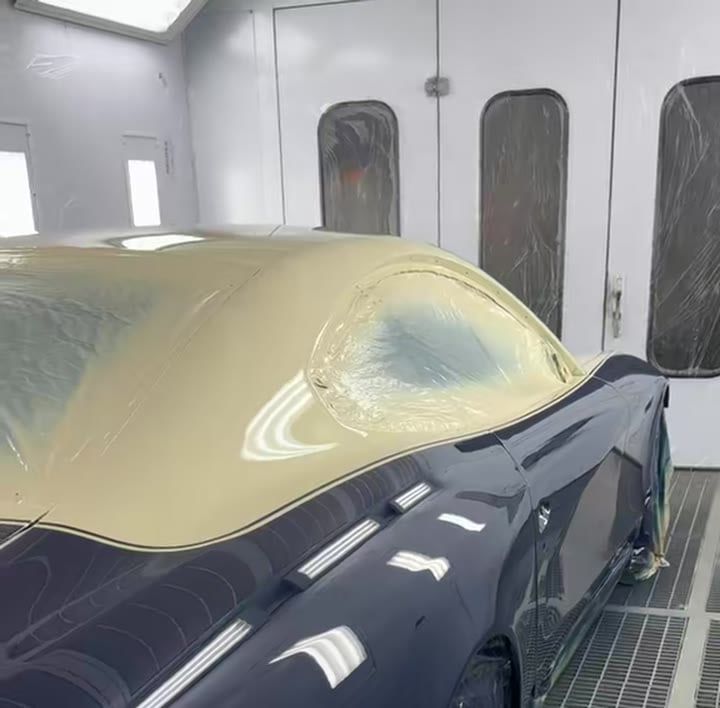
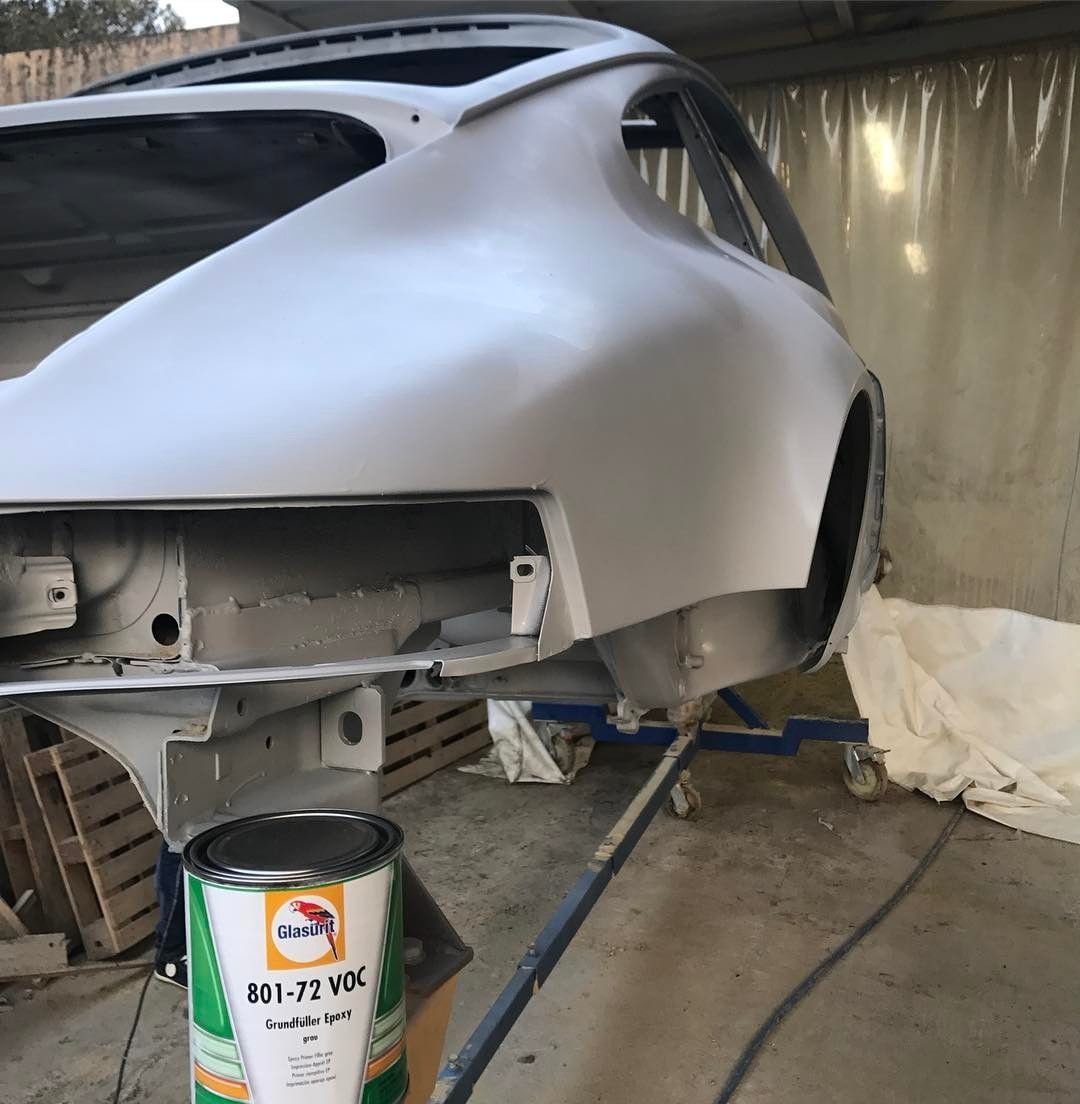
Once bare, the shell is primed without delay, usually in epoxy, like the blasted and primed 964 shell seen at the workshop. The 1967 911 S Targa followed exactly that path: blasted shell, metalwork, then ivory paint.
Metalwork: repair, replace or fabricate?
Sound steel is kept. A rusted-through area is cut back to clean metal and a repair section let in; a panel too far gone is replaced. Replacement panels, original or reproduction, almost always need fitting: edges reworked, curvature corrected, mounting points checked. Where no panel exists, the steel is shaped to the original form.
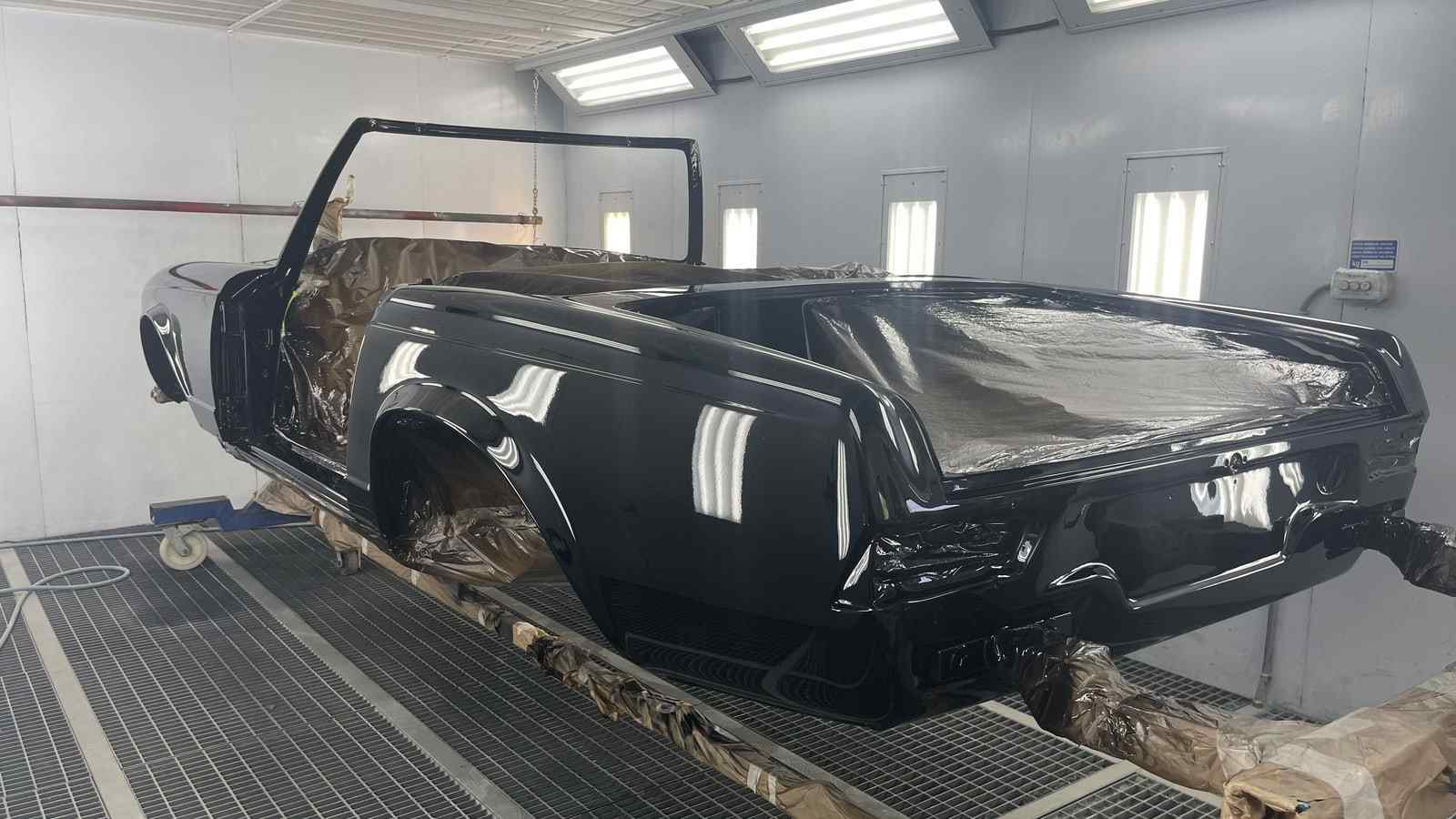
Before any structural section is cut out, the shell is braced and its dimensions recorded, then checked against the manufacturer’s figures, so that nothing moves during the work. Welds follow the position and appearance of the factory joints, without the excess heat that would warp the panel. The 1967 Targa received new front wings; the 1989 930 Turbo Cabriolet, stripped to bare metal, full metalwork; a wing of the 280 SL Pagoda was reworked, and the shell of the 220 SEb Cabriolet taken back to bare metal.
Panel gaps, opening panels and sealing
Doors, bonnet, engine lid and wings are trial-fitted before paint: panel gaps and flush fits are set on bare metal, where an edge can still be reworked, not once the paint is on. A door that closes without force, with an even gap along its whole length, is the mark of a true shell.
Then come seam sealer along the joints, underbody protection and cavity wax injected into rails, sills and pillars once painting is complete. Seals, brightwork and trim go back on at the end; our chrome plating page covers the restoration of brightwork, and colour matching is described on our car paint page.
Aluminium and modern bodies
An aluminium body, whether opening panels on a classic or a complete structure on a modern car, cannot be treated with steel methods: straightening, joining and protection follow rules of their own, and contact between the two metals has to be insulated. Recent Ferraris are a case in point, described on our page on Ferrari bodywork.
On a recent car, minor accident damage is repaired without redoing everything. A dent with intact paint can often be removed by paintless dent removal; a more damaged panel is straightened or replaced, and its hidden brackets checked. For a car that needs everything, the bodywork becomes part of a full restoration.