How do you find the original paint code of a classic car?
A respray starts with research. The colour code is usually stamped on a plate or printed on a label fitted by the manufacturer, and its location depends on the make and the era: front luggage compartment, door shut, engine bay. It is then cross-checked against the factory records, such as the build card (the Kardex at Porsche, the data card at Mercedes-Benz), a certificate of origin or the service book.
A code is not always enough. Many cars have been resprayed by one owner or another over the decades. We therefore look for the colour where it has escaped the sun: under a seal, behind a trim panel, on the inside of a flap. Some Porsches left the factory in an off-catalogue colour under the Paint to Sample programme, a reference that appears in no standard colour chart.
The formula is then rebuilt and checked on spray-out cards, compared with the car in daylight and under workshop lighting: a shade can look right under a tube light and wrong in the sun. You approve the sample before any paint goes on the car.
Original colour or a new one?
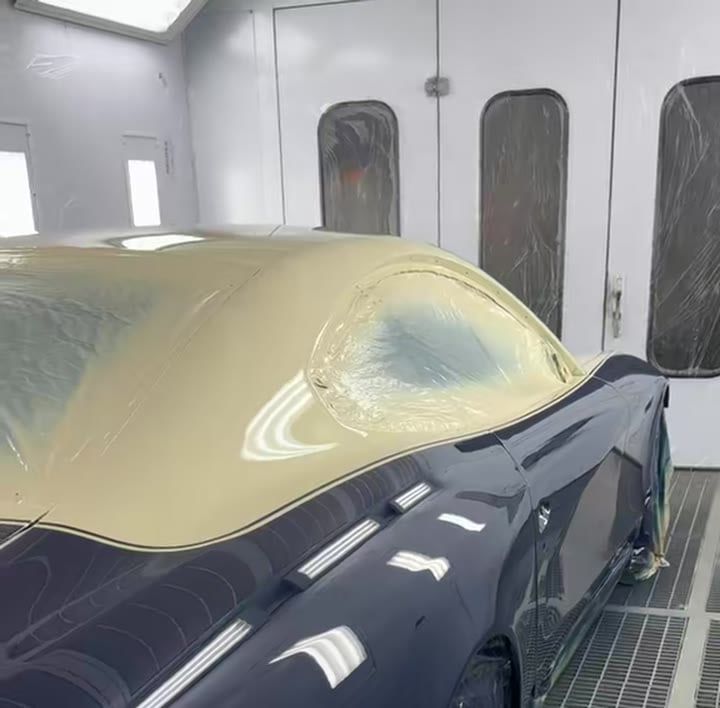
Keeping the colour the car wore when it left the factory preserves its historical coherence, and for a collector’s car it is often the decision that matters most. A car can also change colour, with the same rigour. The Ferrari 612 Scaglietti repainted at the workshop, delivered in silver grey, now wears a two-tone scheme of midnight blue and cream.
We discuss it before starting: the car’s history, how you use it, what you expect of it. If you wish, a colour change extends to the door shuts, the door apertures and the engine bay, so that no trace of the old colour shows when a door is opened.
Bare-metal preparation: where the real work is done
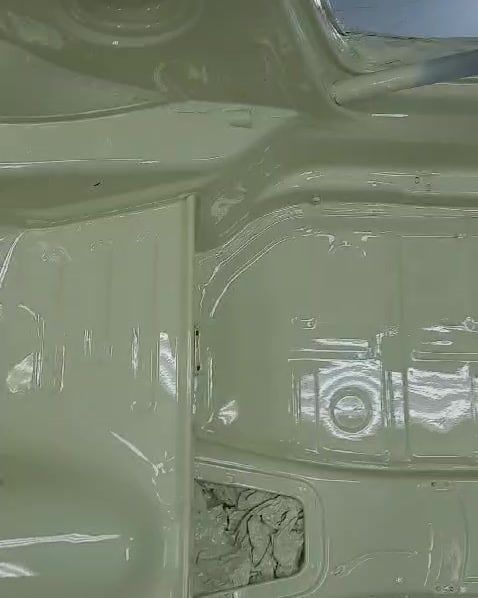
Paint is only as good as what lies beneath it. Depending on the car, the old finish is removed by chemical stripping, blasting or soda blasting, down to bare metal. The shell of a Porsche 964, blasted and then sealed in epoxy primer at the workshop, shows this stage: every panel exposed, every trace of corrosion visible.
Anything that concerns the metal itself, such as rot, sills, floors or panel gaps, is dealt with first by our bodywork team. Then comes the preparation proper:
- epoxy primer on bare metal, for adhesion and protection against corrosion;
- filler in thin skims only, where the metal cannot be worked any further;
- high-build primer, then block sanding checked with a guide coat that reveals every low spot;
- degreasing, masking, and removal of glass, seals, brightwork and fittings.
Single-stage or basecoat and clearcoat?
Older cars usually left the factory in single-stage paint: colour and gloss in one layer, with a characteristic depth. More recent cars, and most metallic colours, receive a coloured basecoat under a clear lacquer.
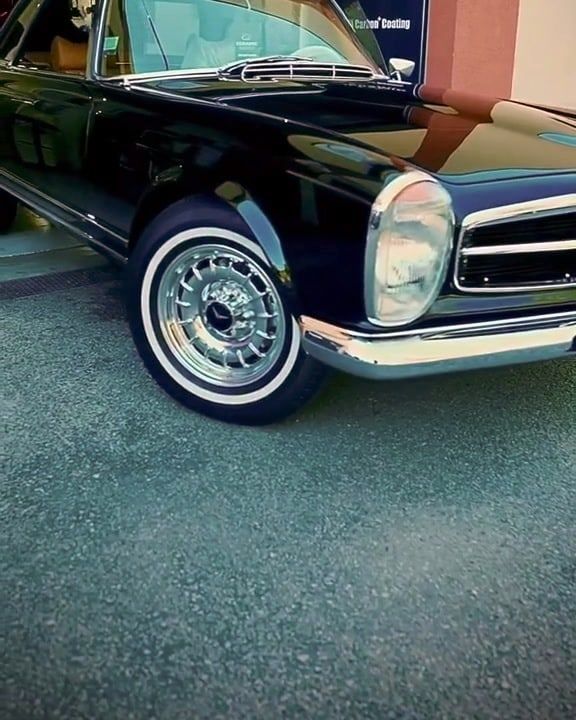
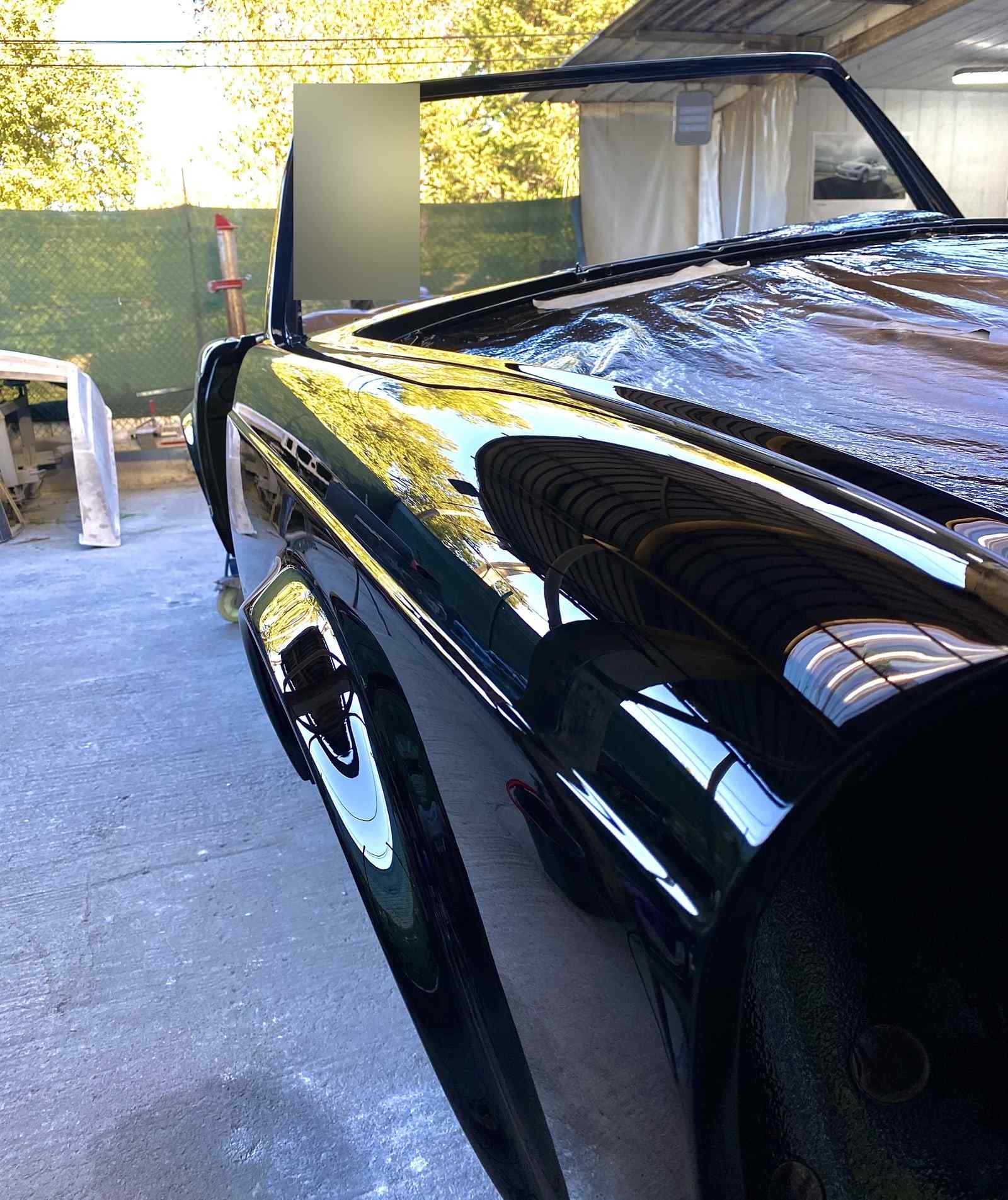
The choice depends on the car and on your intentions: the period look of a single-stage finish, or the resilience of a clearcoat on a car that will cover many miles. The black of the Mercedes 280 SL Pagoda lacquered at the workshop shows what a dark colour should achieve: a deep, haze-free reflection in which the lines read like a mirror.
Colour goes on in a spray booth, in filtered air at a controlled temperature, since dust and moisture are the first enemies of a good finish. Removed panels, doors, lids and bolt-on wings, are painted separately, on their hidden faces as well as the visible ones.
Two-tone paint and coachlines
A two-tone scheme is drawn before it is painted. The dividing line follows a crease, a swage line or a moulding, and where it falls decides the balance of the whole car. On the Ferrari 612 Scaglietti, midnight blue and cream meet along a fine dividing line.
Masking is done in several passes, the second colour applied only once the first has settled, for a crisp join without a ridge. Coachlines are applied by brush or by spray depending on the style sought: fine and discreet on a grand tourer, bolder on a coachbuilt-inspired body.
Flatting, polishing and paint protection
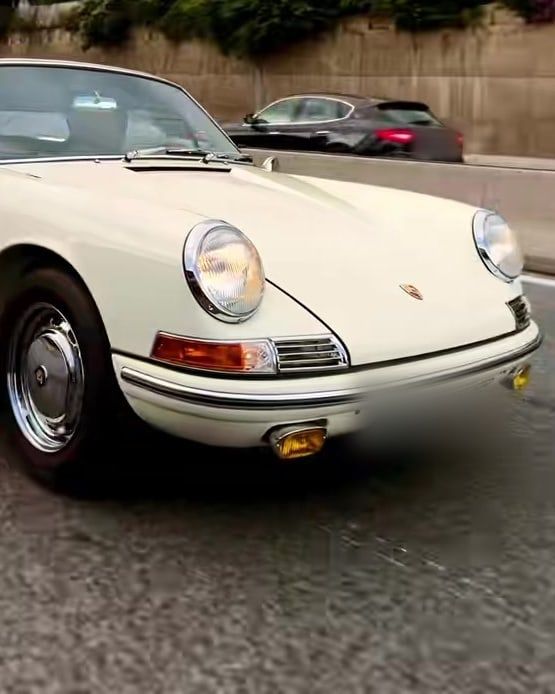
Once fully cured, the paint is wet-flatted with very fine abrasives to remove orange peel and trapped dust, then polished in several stages to a full gloss. It is this work that gives the Porsche 911 S Targa 1967 painted in ivory its taut reflection: on a pale colour, every surface flaw shows against the light.
On existing paint, machine polishing corrects fine scratches and haze without a respray, and a local repair blended into the neighbouring panels deals with a chip or a scuff. Afterwards, we advise you according to how the car is used: gentle washing, wax, clear film on stone-chip areas.
For a particular make, see Porsche bodywork and paint and Ferrari bodywork; for a car taken right back, paintwork is one chapter of a full restoration, with rechromed brightwork refitted after polishing. You receive photographs of the key stages, and the quote itemises preparation, colour and finish.