Porsche 911 bodywork: where does the rust hide?
On a 911 built before the 1976 model year, the steel monocoque is not galvanised. It carries the car’s stiffness, its handling and a large share of its value. Porsche 911 bodywork can look sound beneath recent paint while hiding old repairs, patches let in over corrosion or thick filler. Before any estimate, we inspect the shell on a lift with a lamp and a magnet and, where needed, suggest local stripping so that the bare metal itself can be seen.
From the 1976 model year, Porsche moved to a hot-dip galvanised body. The later G-series 911s resist corrosion far better, though they are not immune to a poor repair after an accident. The very first cars have a page of their own: Porsche 911 from 1964 to 1973.
- floor pans and central tunnel, from the cabin and from underneath
- sills and longitudinals, which give the shell its rigidity
- battery box and front luggage compartment floor
- windscreen corners and rear window frame, where water sits under the seals
- roof gutters and door bottoms
- jacking points, wheel arches and wing joints
Porsche 356: sills, floors and nose
Bodywork on a Porsche 356 follows different rules. Every panel is curved, the steel is thin and the sills form part of the structure itself. The weak areas are well known: sills, floors, nose panel and headlamp bowls, battery box, and the bottoms of the doors and bonnet.
Cutting out a 356 sill without precautions is enough to distort the shell and throw the door gaps. The structure is therefore braced while the work is done, the doors stay in place so that the gaps can be checked, and every new panel, whether reproduction or hand-formed, is fitted before it is welded.
Our work on a Targa, a Turbo and a 964
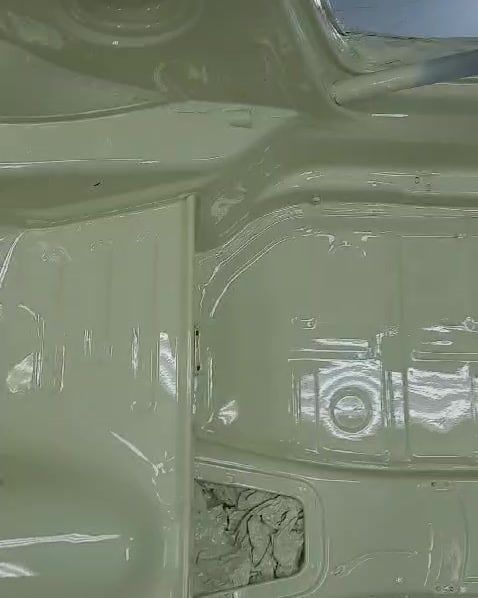
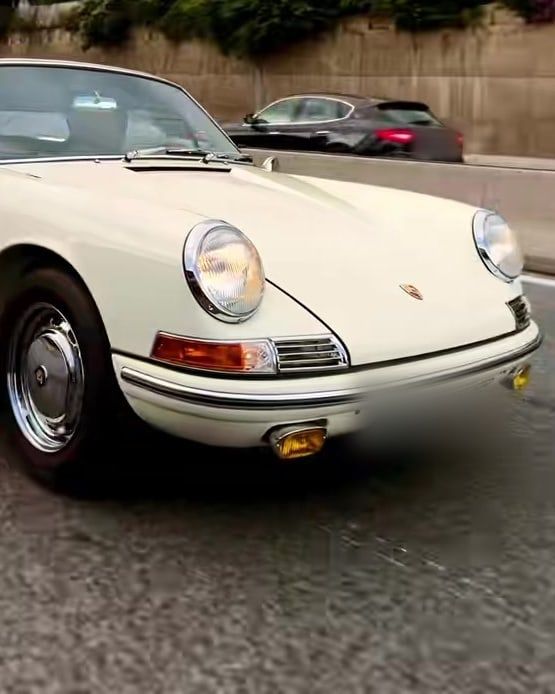
On the 1967 911 S Targa soft-window, the shell was blasted back to bare metal. Stripping exposed the rust inside the sills; the metalwork was repaired, the front wings replaced with new ones, and the car refinished in ivory, floor pans included. On a Targa, the fixed roll bar and the seals of the removable roof deserve particular care: old water ingress usually shows in the floors and sills.
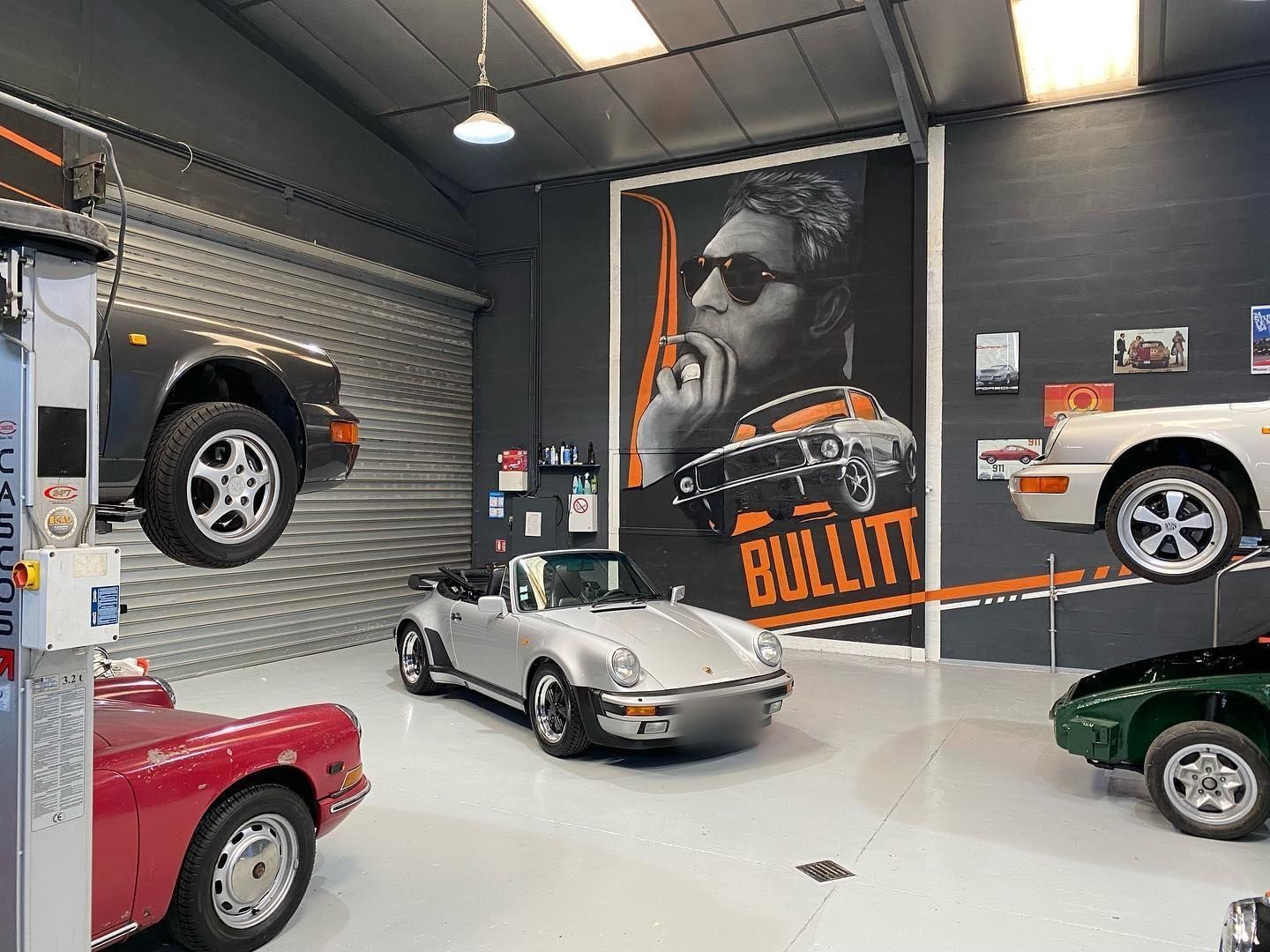
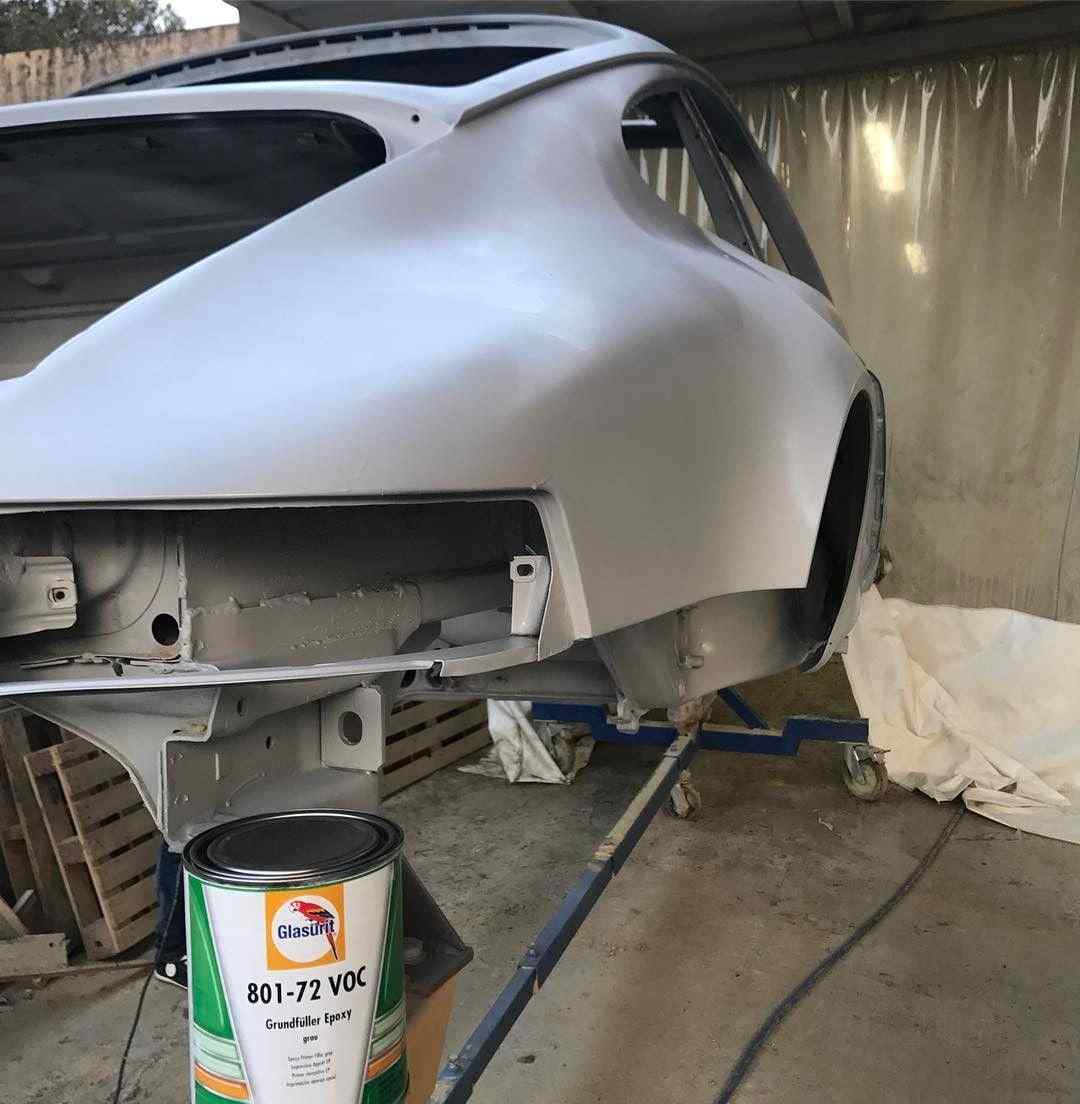
The 1989 930 Turbo Cabriolet was taken back to a bare shell, its metalwork repaired and the body refinished in silver, widened rear wings included. A 964 shell blasted and sealed in epoxy primer has also been through the workshop, and the 964 Carrera 4 was fully resprayed in metallic grey as part of its complete restoration.
Where is the Porsche paint code, and how is the original colour confirmed?
On a modern Porsche, the paint code normally appears on the vehicle data label in the front luggage compartment and in the warranty and maintenance booklet. On a classic, the label has often gone. The Certificate of Authenticity that Porsche issues on request, the car’s own documents and traces of colour found in hidden areas, beneath trim or behind the dashboard, confirm the original colour.
The historic shades of the early 911, Light Ivory, Irish Green, Bahama Yellow, Polo Red or Slate Grey, each have their own formula, and a single name may have covered slightly different shades over the years. The colour is mixed from the code, then checked on test panels in daylight before it is applied.
Original colour, Paint to Sample or a new shade?
Paint to Sample is the programme through which Porsche finishes a new car in a colour outside the standard range. For a classic, the choice is yours: a return to the documented factory colour, a historic Porsche shade from another year, or a personal colour. We simply explain what each option means: collectors generally favour a car in its original colour, while a well-chosen shade can also serve a bespoke build.
The paintwork then follows a strict order: primer, base coat and lacquer over a sound shell, followed by cavity wax and underbody protection, as at the factory.
Accident repair on a modern Porsche
From the 996 to the 992, and on the Cayenne, Macan, Panamera or Taycan, repair works under other constraints. Recent generations combine steel and aluminium, which calls for joining and repair methods suited to each material. Metallic and pearlescent colours require careful blending into neighbouring panels and, depending on specification, sensors and driver-assistance radars housed in the bumpers must be checked after the work.
The estimate separates what can be repaired from what must be replaced, and states the origin of each part: genuine, equivalent quality or reconditioned. Our bodywork page describes the method we apply to every marque.
Panel gaps, the final sign of correct work
A 911 is judged by its gaps: front lid, doors, engine lid, and the line of the wings against the bumpers. Opening panels are trial-fitted before paint, adjusted, then refitted with new seals, restored trims and badges and, where needed, replated brightwork. During the work you receive photographs of each important stage, and nothing further is undertaken without your approval. A first opinion is possible from photographs and video: simply request an estimate. Bodywork that forms part of a wider project continues on our classic Porsche restoration page.