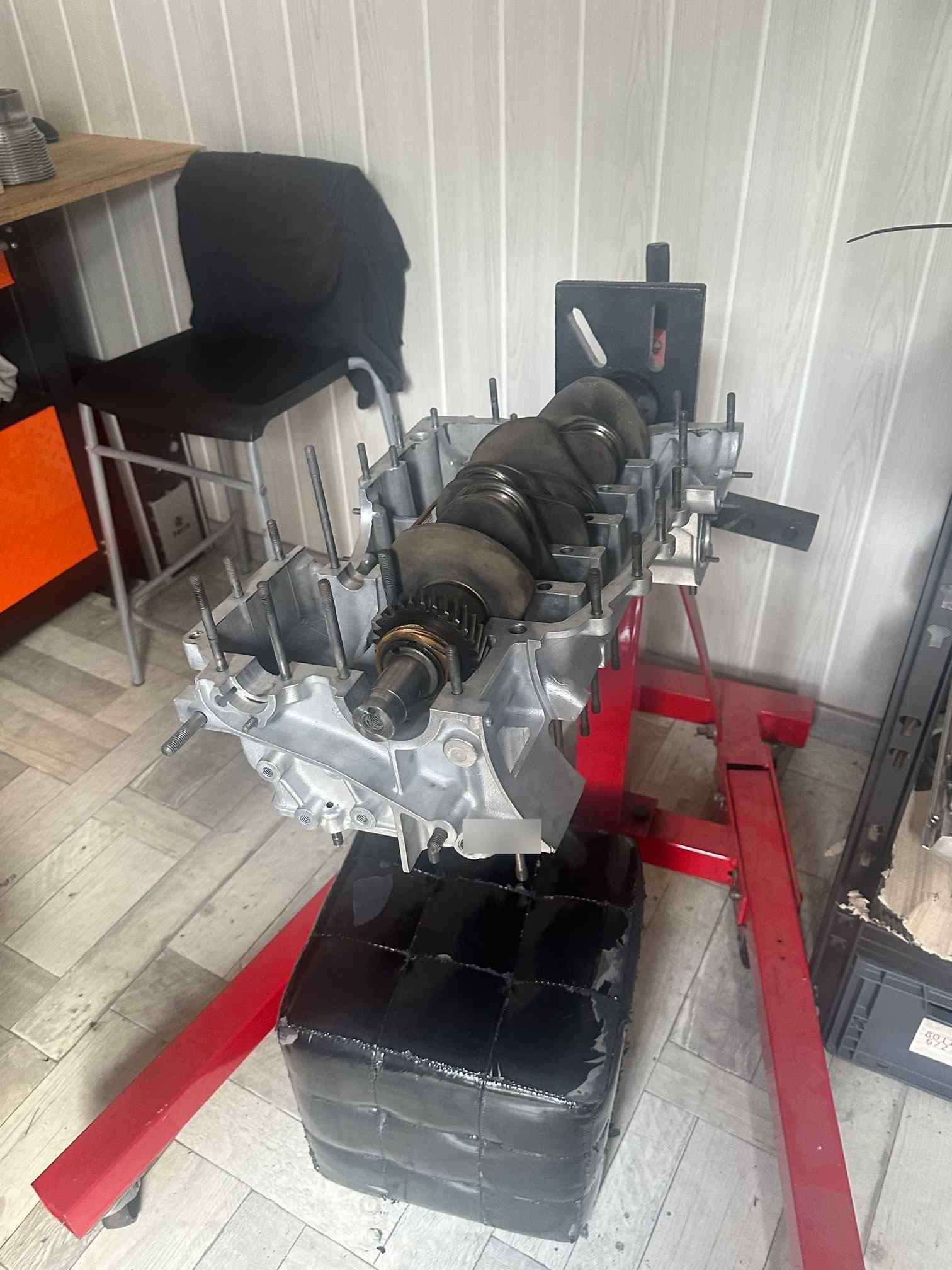
When does a Porsche 911 engine need a rebuild?
A Porsche engine rebuild is never decided on mileage alone. The signs that lead to one are well known: rising oil consumption, smoke on start-up, uneven compression from one cylinder to the next, timing chain noise, persistent leaks, loss of power. The first job is to measure them with the engine still in the car: compression test, leak-down test, oil analysis and, where access allows, an endoscope inspection.
These findings show whether a full rebuild, a top-end rebuild (heads, barrels, pistons, timing) or a targeted repair is needed. They rely on the same methods as a Porsche diagnosis and lead to an estimate itemised line by line, before anything is removed.
The air-cooled flat-six: what the workshop checks
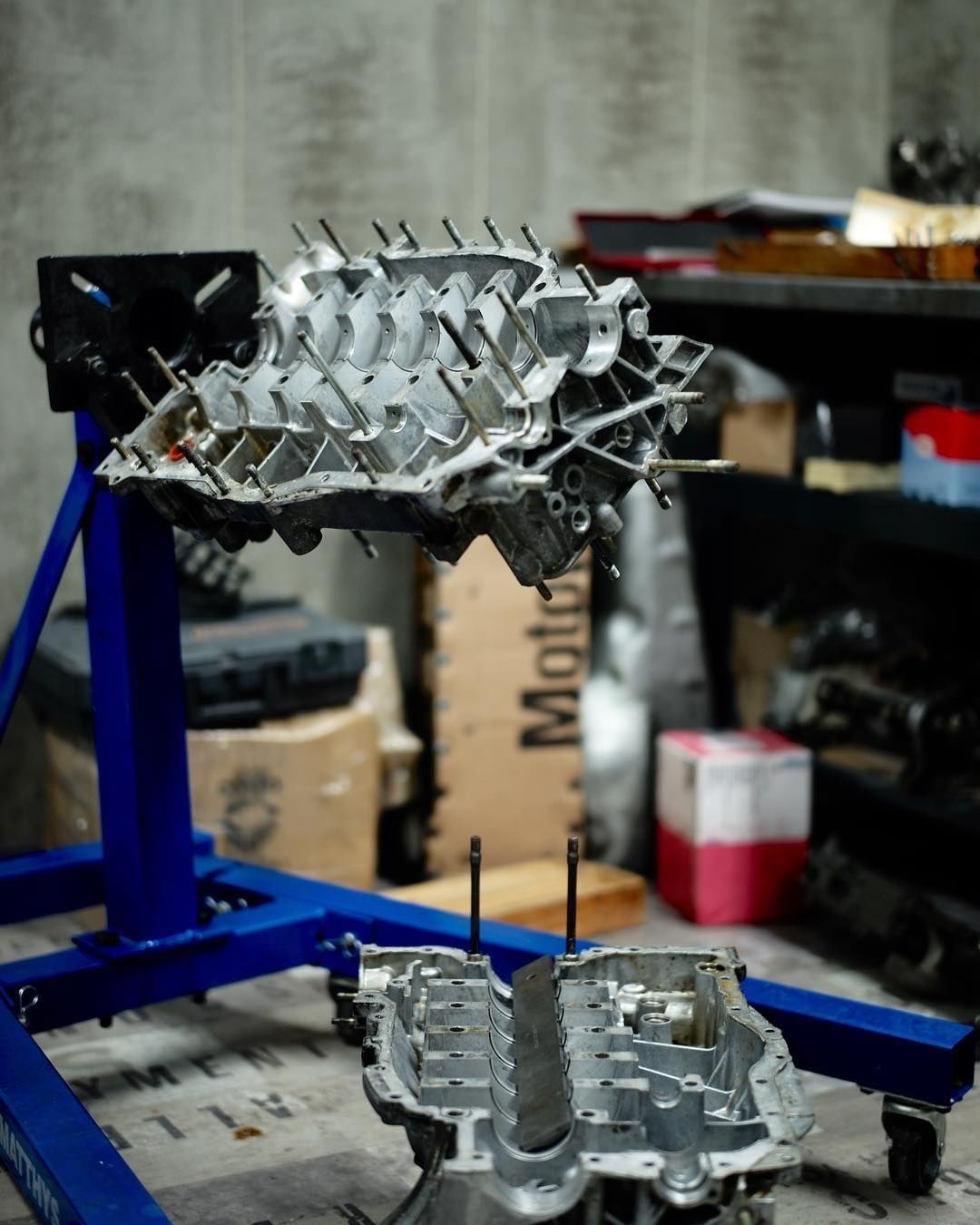
From 1964 to 1998, the 911 kept an air-cooled six-cylinder boxer engine, of the family that began with the Type 901. Its cylinders are separate, each topped by its own head, and the camshafts run in one cam housing per bank. Every head, barrel and piston is therefore marked and measured on its own. Before it, the 356 used a flat-four, with pushrods and rockers on most versions, which the workshop approaches with the same rigour.
The crankcase material changed over the generations: aluminium on the first 911s, magnesium on part of the engines of the late 1960s and the 1970s, then aluminium again from the 911 SC. Magnesium cases call for particular care, notably with the head studs, which can pull out of the case on some versions; on the 911 SC and 3.2 Carrera, some original studs are known to break. Their condition is checked every time the engine is opened.
The chain-driven timing is the other classic concern. The early hydraulic tensioners, with their own sealed oil reservoir, could drain and let the chain slap; the 3.2 Carrera introduced tensioners fed by engine oil pressure, an upgrade often fitted to earlier 911s during a rebuild. Chain guides, sprockets, rocker arms and their shafts are inspected at the same time.
Porsche 964, 993 and 930 Turbo engine rebuilds
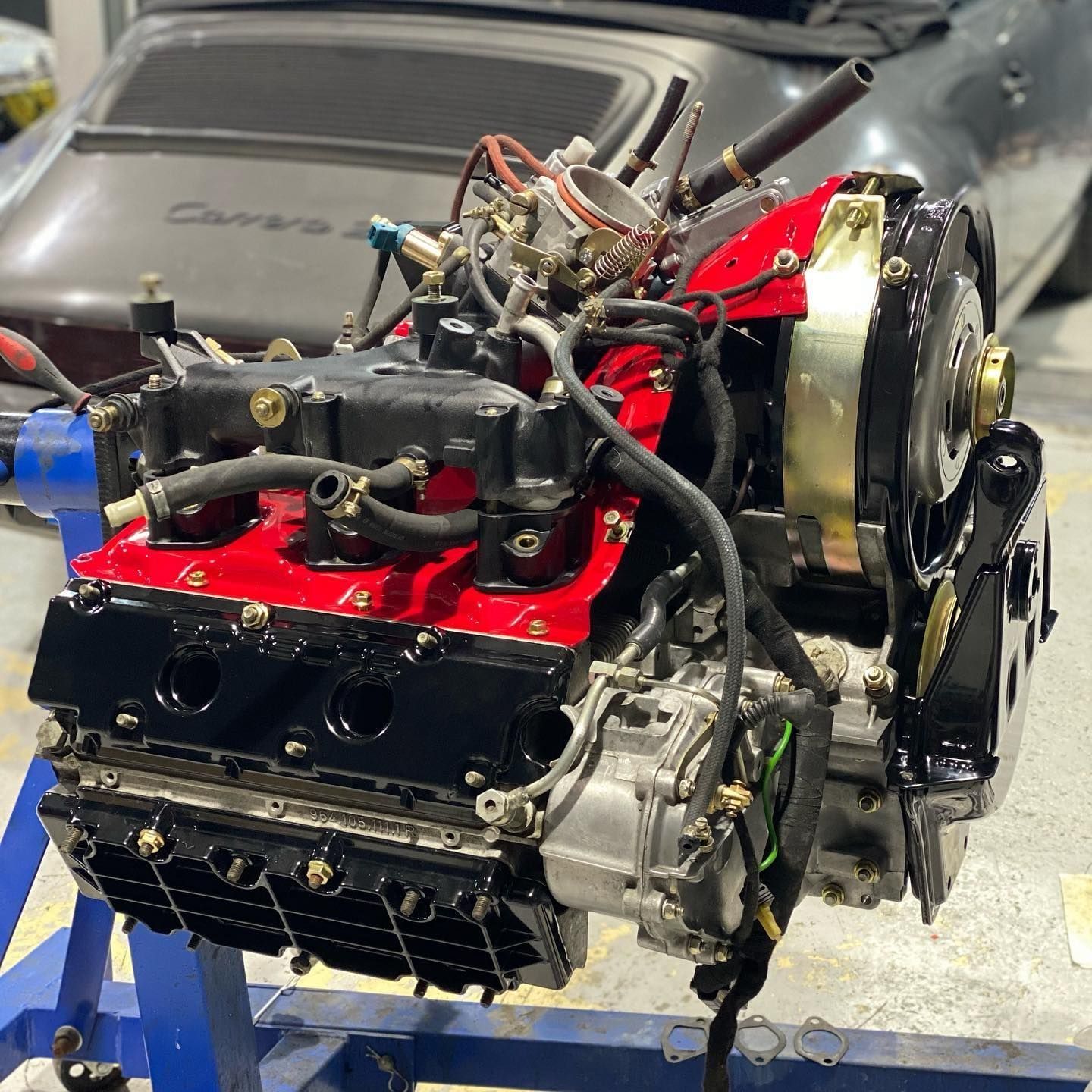
The Porsche 964 received a 3.6-litre twin-spark engine, with two plugs per cylinder. Its weak points are well documented: oil weeps to keep an eye on, and a twin distributor, which sends the spark to both plugs of each cylinder, to be checked. The 964 engines opened in our workshop show what only a strip-down reveals: the true condition of barrels, pistons and valves.
The Porsche 993, the last air-cooled 911, adopted hydraulic tappets; on versions fitted with it, the secondary air injection system, whose passages in the heads can become blocked, is also examined. The 930 Turbo adds the turbocharger and, on the 3.3-litre, the intercooler: its thermal stresses justify a careful look at the heads, the studs and the turbo itself.
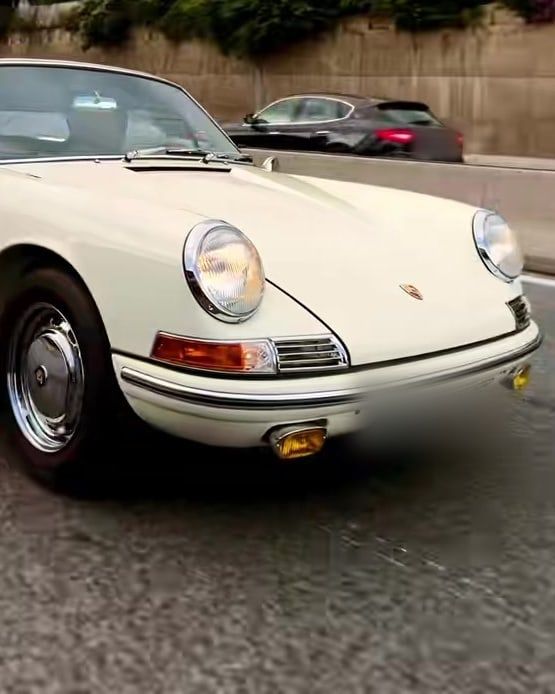
The engine of the 1989 930 Turbo Cabriolet restored in our workshop was taken apart piece by piece and rebuilt, before being mated to its G50 gearbox, also overhauled. That of the 1967 911 S Targa, a two-litre flat-six, was opened up, its six cylinder heads refurbished, then reassembled with its gearbox.
Water-cooled M96, M97 and 9A1 engines: the known concerns
With the 996 and the Boxster, Porsche moved to water cooling with the M96, followed by the M97 in the first-generation 997. Two issues dominate: the intermediate shaft (IMS) bearing, whose failure can severely damage the timing, and bore scoring, which shows itself through oil consumption and a characteristic noise. Not every car is affected, but both justify an inspection before purchase as well as before a rebuild. The Turbo and GT3 of the 996 generation use the so-called « Mezger » engine, of a different design.
The direct-injection 9A1 arrived with the second-generation 997 and did away with the intermediate shaft. An endoscope inspection of the bores and a reading of the electronic diagnosis remain the best basis for assessment. A rebuild then means opening the block completely; the workshop sets out the possible solutions and their limits before any decision is made.
How does a rebuild proceed, from removal to running-in?
On a 911, the engine and gearbox come out together from underneath and are then separated, which is the right moment to inspect the clutch and the Porsche gearbox. The engine is stripped completely. Every part is cleaned, labelled and stored, then measured: crankshaft and con-rod bearing clearances, ovality and taper of the barrels, piston clearance, condition of the valve guides and seats, flatness of the sealing faces.
The heads are refurbished (valves, guides, seats), barrels and pistons renewed or replaced according to the measurements, with original, equivalent-quality or reconditioned parts whose origin is stated. Mahle, the long-standing supplier of many original barrel-and-piston sets, remains a reference. Assembly follows the manufacturer's torque settings and adjustments; the engine is then run in methodically, and the car is road-tested before it is returned.
During the work, photographs of the key stages are sent to you, and no additional part is replaced without your agreement. The detailed invoice becomes the written record of the rebuild. The craft is described more broadly on our engine rebuild page.