When does an engine need a rebuild?
A classic car engine rebuild should never be decided on a hunch. The signs that justify one are well known: low or uneven compression from one cylinder to the next, rising oil consumption, blue smoke on start-up or on the overrun, timing-chain noise, low oil pressure when hot, leaks that return despite new gaskets. An engine that has stood for years brings risks of its own: stuck piston rings, dried-out seals, corrosion in the oil and water passages.
Before any decision, the workshop carries out a full engine diagnosis: compression test, cylinder leak-down test, fault-code reading on electronically managed engines, inspection of the oil and filter. These checks separate a targeted repair — a gasket, a cylinder head, a timing job — from a complete rebuild.
The stages of a full engine rebuild
A complete rebuild follows a strict order. Nothing goes back together until it has been cleaned, inspected and measured, and photographs of each important stage are sent to you while the work is under way.
- Engine removal, with the gearbox where the car requires it, and every component labelled.
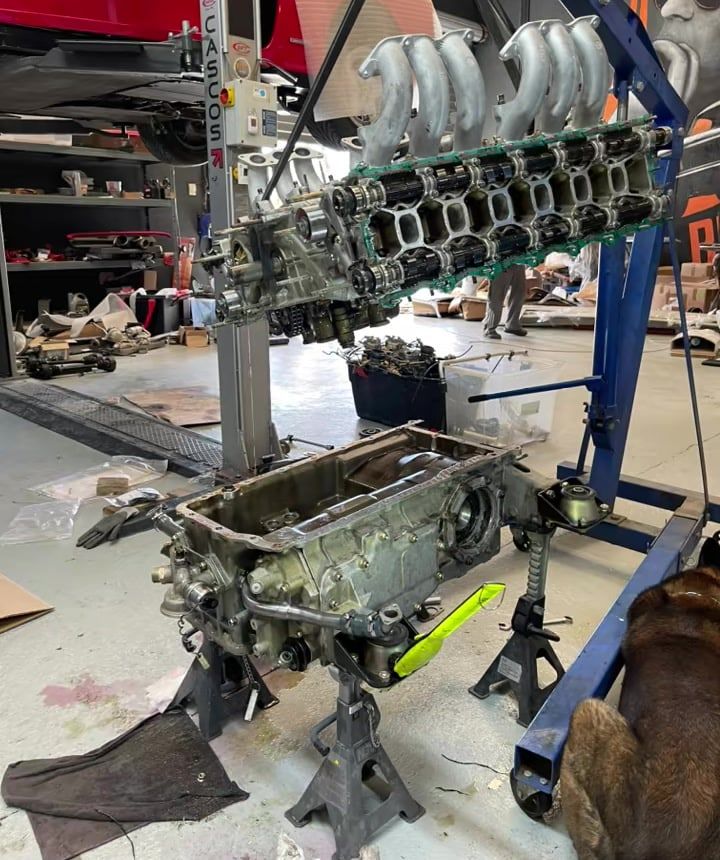
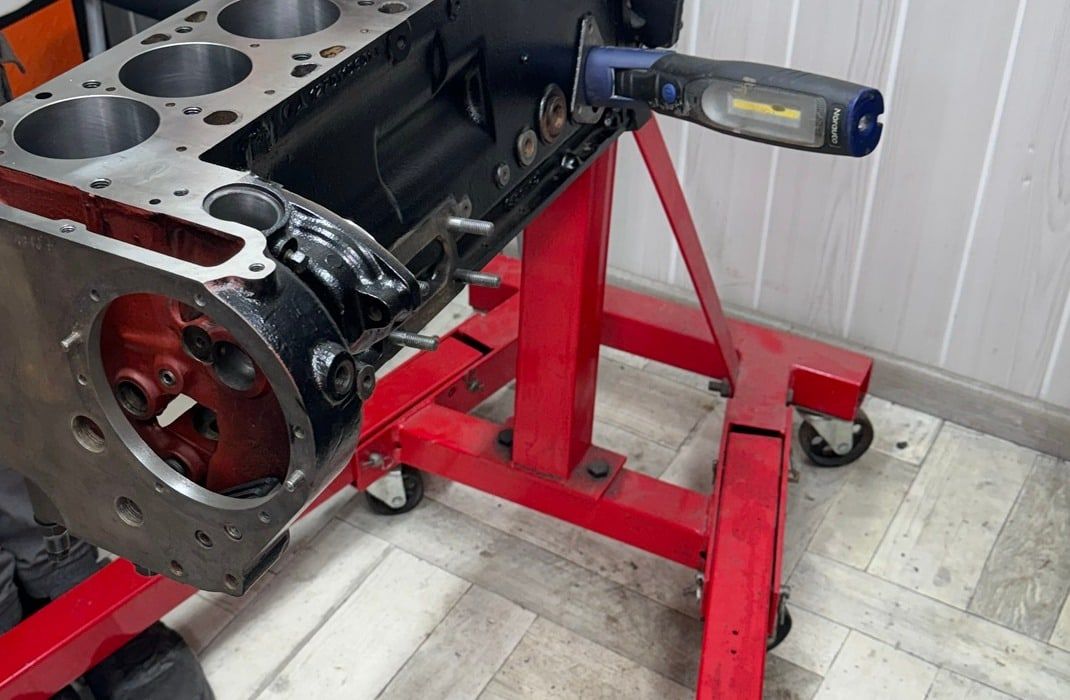
- Complete strip-down, cleaning, visual inspection and crack testing of critical parts.
- Measurement: bore diameter, ovality and taper, piston-to-bore clearance, ring end gaps, crankshaft main and big-end journals, bearing clearances, flatness of the gasket faces.
- Cylinder heads: valves, guides, seats, springs, camshafts, followers or rockers, machined or replaced according to the measurements taken.
- Rotating assembly: barrels and pistons, rings, connecting rods, crankshaft and bearings, balanced whenever parts are replaced.
- Timing: chains or belts, tensioners, guides and sprockets, with the cam timing checked.
- Reassembly with new gaskets and the manufacturer’s torque figures, followed by fuelling and ignition set-up.
- First start, pressure and temperature checks, running-in and road testing.
Flat-six, V12, straight-six: each layout has its weak points
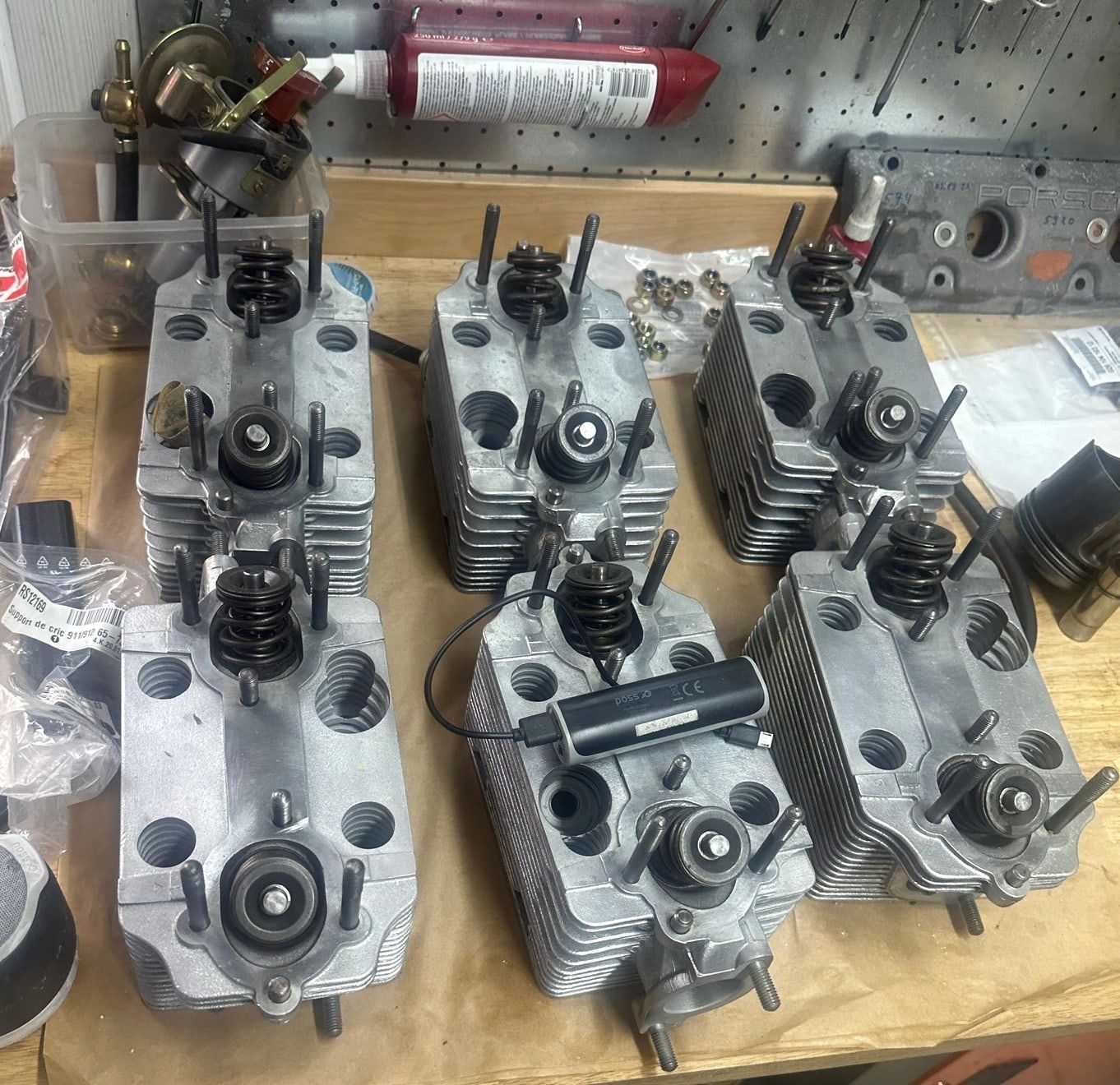
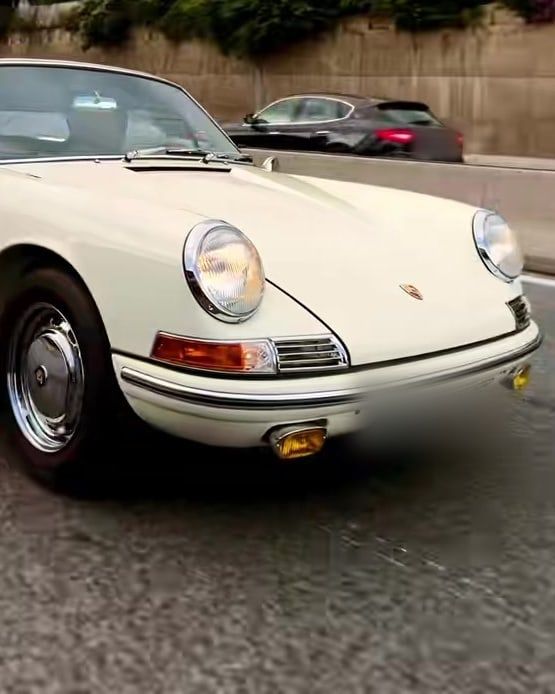
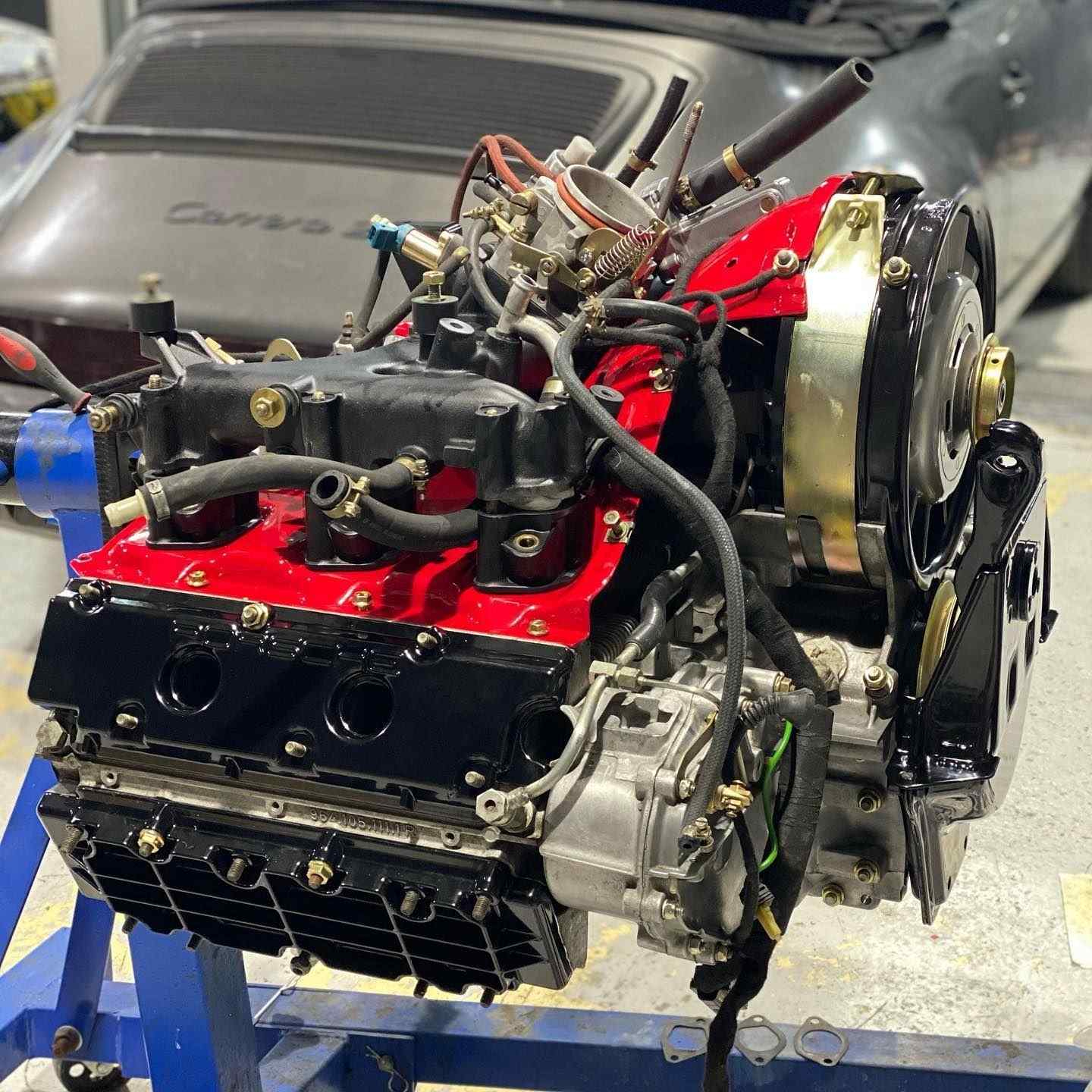
The air-cooled flat-six of the Porsche 911 has individual barrels and cylinder heads, dry-sump lubrication with a separate oil tank and chain-driven camshafts. The points to watch are well documented: cylinder-head studs, notably on some 2.7-litre engines with magnesium crankcases; the chain tensioners, fed by oil pressure from the Carrera 3.2 onwards and often retrofitted to earlier cars; and the oil return tubes, a classic source of leaks. The method specific to these engines is set out on our Porsche engine rebuild page.
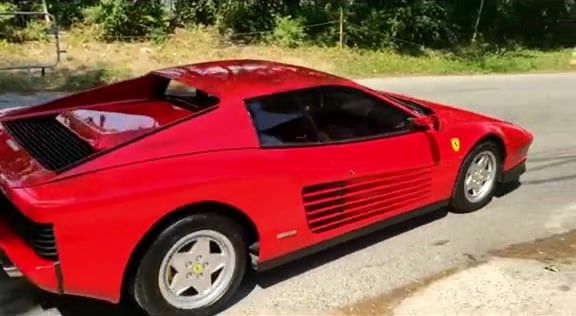
The flat-twelve of the Testarossa and the Ferrari V8s of the same era rely on toothed timing belts, whose age and condition decide the engine’s survival; a Ferrari cambelt service is one of the fundamental jobs on these cars.
Straight-sixes from Mercedes, Jaguar and BMW are judged above all by their cylinder head and timing chain; on the twin-cam Jaguar XK engine, valve clearances are set with calibrated shims. Modern engines add electronics and some well-documented faults, such as the intermediate shaft bearing of Porsche’s M96 and M97 engines, which is checked before the engine is opened.
Carburettors and injection: fuelling worthy of the engine
A rebuilt engine that is poorly fuelled will never give what it should. The workshop deals with carburettors — including the two triple-choke units of the early 911 — and with the Bosch mechanical injection systems of the classics: the twin-row plunger pump of the 911 E and S from 1969 to 1973 and of the Carrera RS 2.7, the injection of the six-cylinder Mercedes and the 300 SL, and the K-Jetronic of the 911 SC and the 930 Turbo.
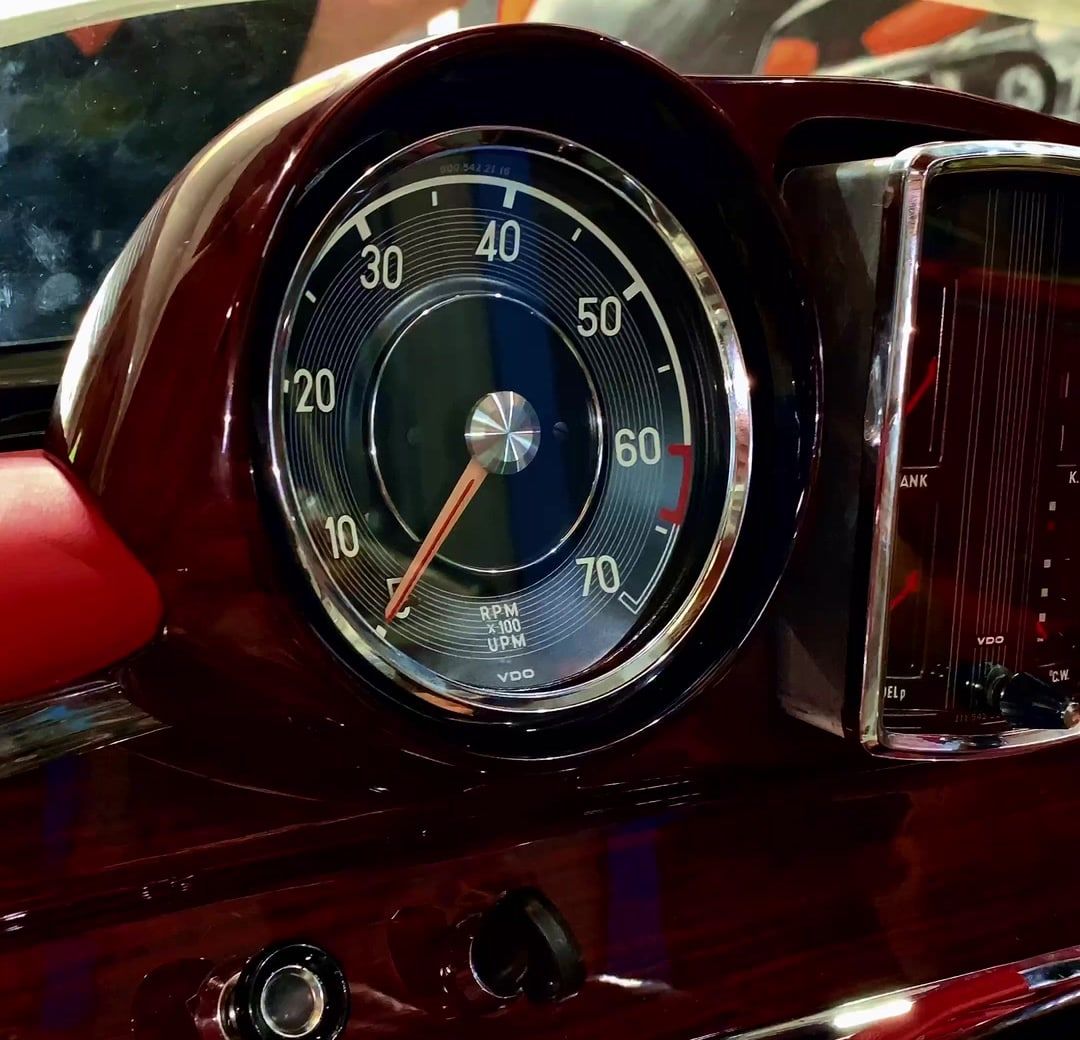
On the Mercedes 220 SEb Cabriolet in our projects, the 2.2-litre straight-six and its Bosch mechanical injection were rebuilt together: one is set up with the other, and it is their agreement that gives a steady idle and clean response.
Engines rebuilt in the workshop
The flat-twelve of the Ferrari Testarossa was removed, fully dismantled, its parts reconditioned, then reassembled, refitted and road-tested. The two-litre flat-six of the Porsche 911 S Targa 1967 was rebuilt as part of its full restoration, as was the engine of the 930 Turbo Cabriolet 1989, whose G50 gearbox was also overhauled.
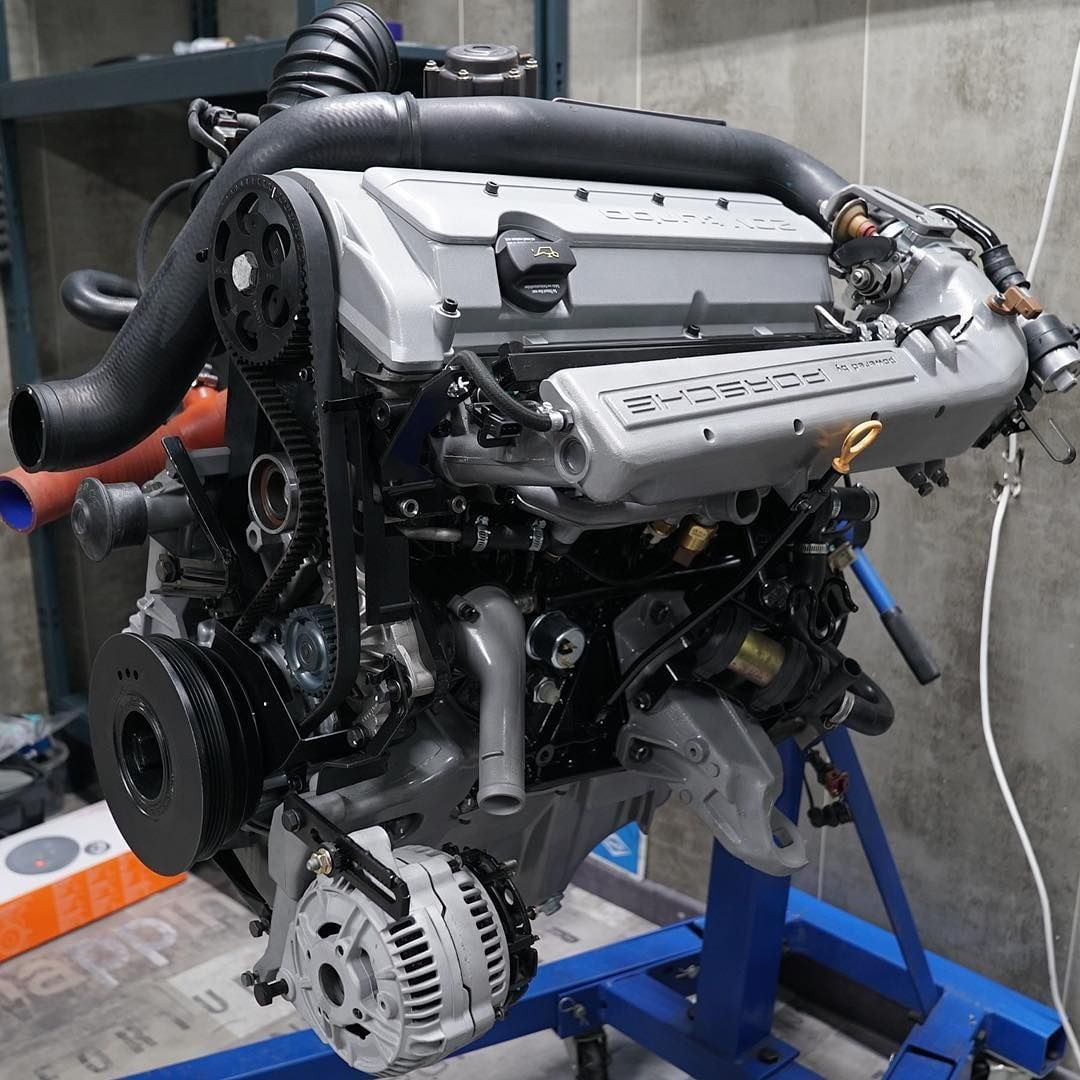
The workshop has also rebuilt the turbocharged five-cylinder of an Audi RS2, the estate developed with Porsche in the mid-1990s. With the engine out, it is also the right moment to inspect the gearbox and the clutch.
Strictly original or quietly improved: your choice
A rebuild can aim for strict originality — period dimensions, parts and finishes — or for discreet improvements in reliability: later-type tensioners, modern gasket materials, a steadier ignition. The choice is yours and it is written into the quotation. Parts are original, of equivalent quality or reconditioned depending on availability, and their origin is always stated.
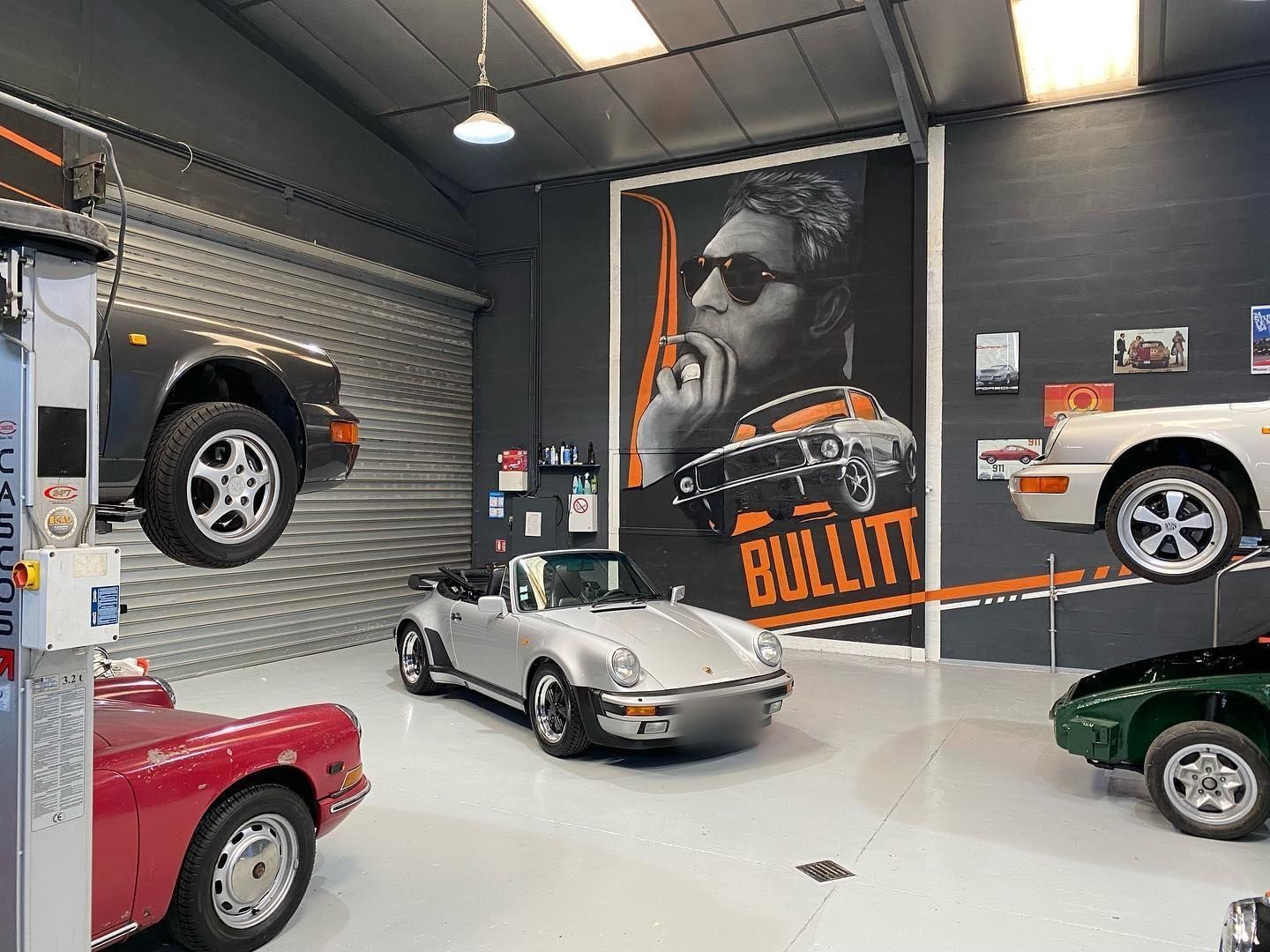
No additional work is carried out without your agreement, and a single team follows the car from strip-down to road test. These jobs sit within the workshop’s wider mechanical repair work; for a car further afield, transport can be arranged, within France and across Europe.