Porsche 993: versions and evolution
Launched in autumn 1993, the 993 is the last air-cooled 911. It carries over the 3.6-litre M64 flat six from the 964, extensively revised, with hydraulic valve lifters, and introduces a multi-link rear axle, known as LSA, that transforms the way the car drives. From the 1996 model year, the Varioram variable-length intake improves the Carrera’s torque and power.
Bodies and versions break down as follows:
- Carrera and Carrera 4, as Coupé and Cabriolet;
- Targa, from 1996, with a large sliding glass roof;
- Carrera S and Carrera 4S, with the wide body;
- Turbo, with twin turbochargers and four-wheel drive;
- GT2, twin-turbo and rear-wheel drive, and the lightweight Carrera RS.
What are the common problems on a 993?
The 993 has a reputation as a reliable 911, provided it is properly maintained. Its weak points are well known:
- the secondary air injection (SAI) system, whose passages can clog over time; depending on their state, cleaning them can mean significant work on the engine;
- the Varioram, on 1996 to 1998 cars: the moving parts of the intake wear and need checking;
- oil leaks, to be traced precisely: seals, casings, pipes;
- the six-speed manual gearbox and the clutch, or the Tiptronic on some cars;
- the multi-link rear axle: bushes, joints and dampers;
- electronics: sensors, engine management, immobiliser.
Porsche 993 service and maintenance
Servicing a 993 follows the manufacturer’s programme. At each visit the workshop checks fluids, leaks, ignition, intake, brakes and running gear; the Porsche servicing page describes a full service step by step.
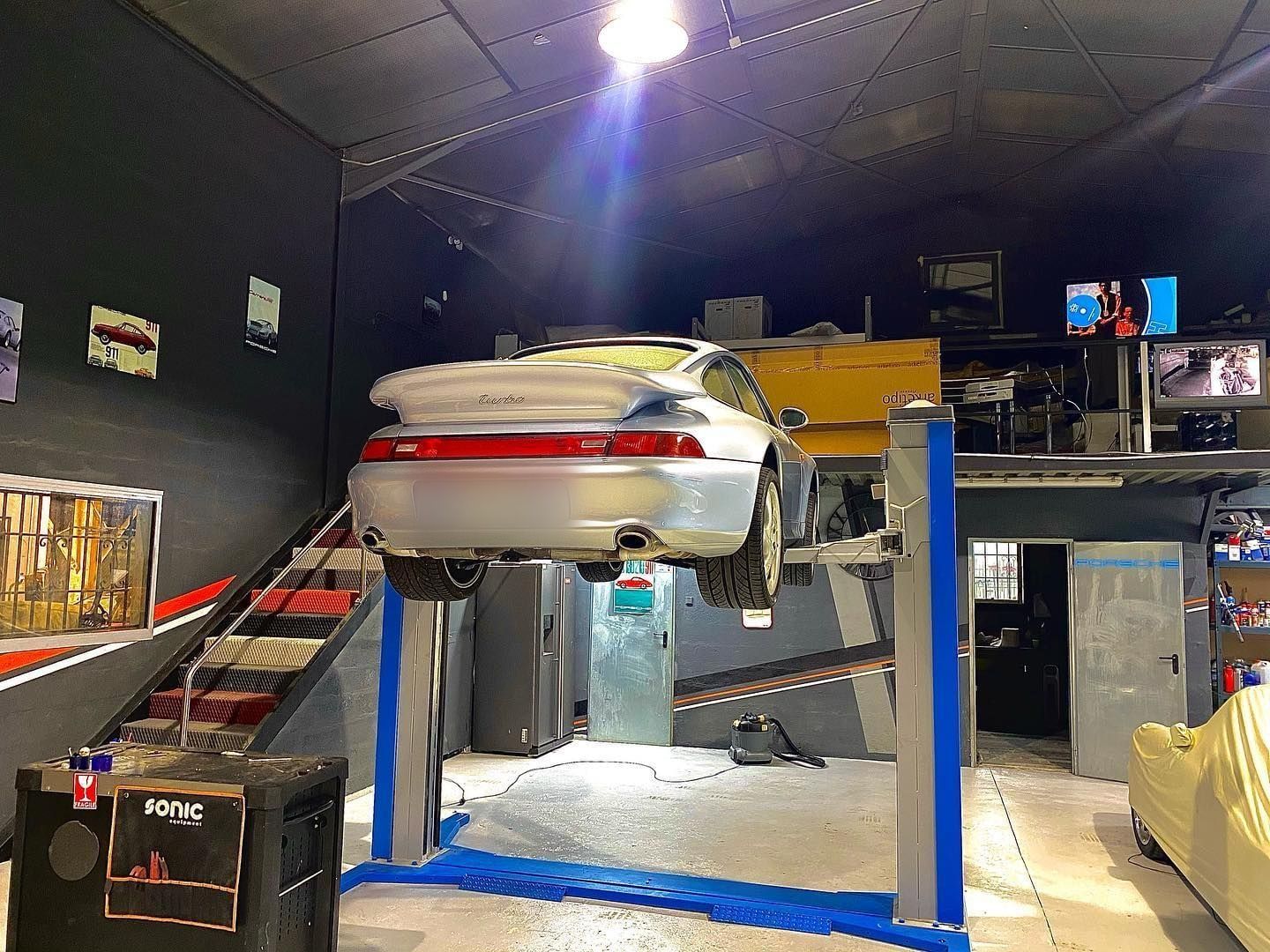
On the Turbo, the turbochargers, their pipework, the intercooler and the four-wheel-drive system are added to the list. The oil change and fluids on a 993 Turbo are among the jobs photographed in the workshop.
The detailed invoice issued after each job becomes part of the service history: for a 993, whose value depends heavily on its records, this paperwork matters as much as the mechanics.
Engine work: the M64, Varioram and secondary air
The 993 engine is strong, but a flat six of this generation eventually needs attention: persistent leaks, uneven compression, oil consumption. A Porsche engine rebuild involves dismantling, measuring every part and a quote based on what is found.
The Varioram and the secondary air system are often dealt with during this work, when the cylinder heads are accessible. Hydraulic valve lifters do away with the periodic valve adjustment of older 911s, which is no reason to skip a careful check of the engine at every service.
Parts, suspension and interior
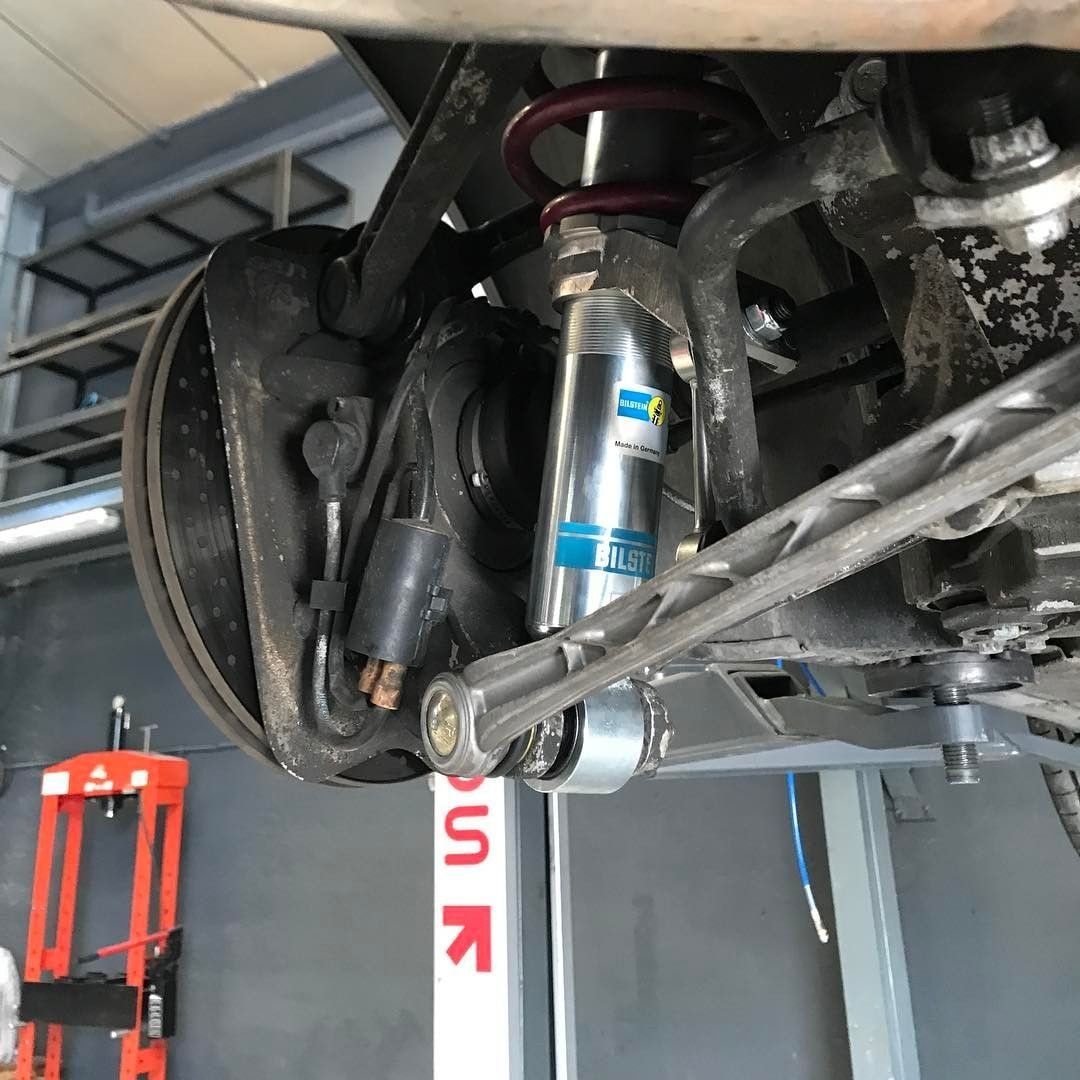
Parts are original, of equivalent quality or reconditioned, depending on availability and your choice, with their origin stated. A 993 Bilstein damper is among the parts photographed in the workshop: the multi-link axle only gives its best with dampers and bushes in good order. The spare parts page explains how we work.
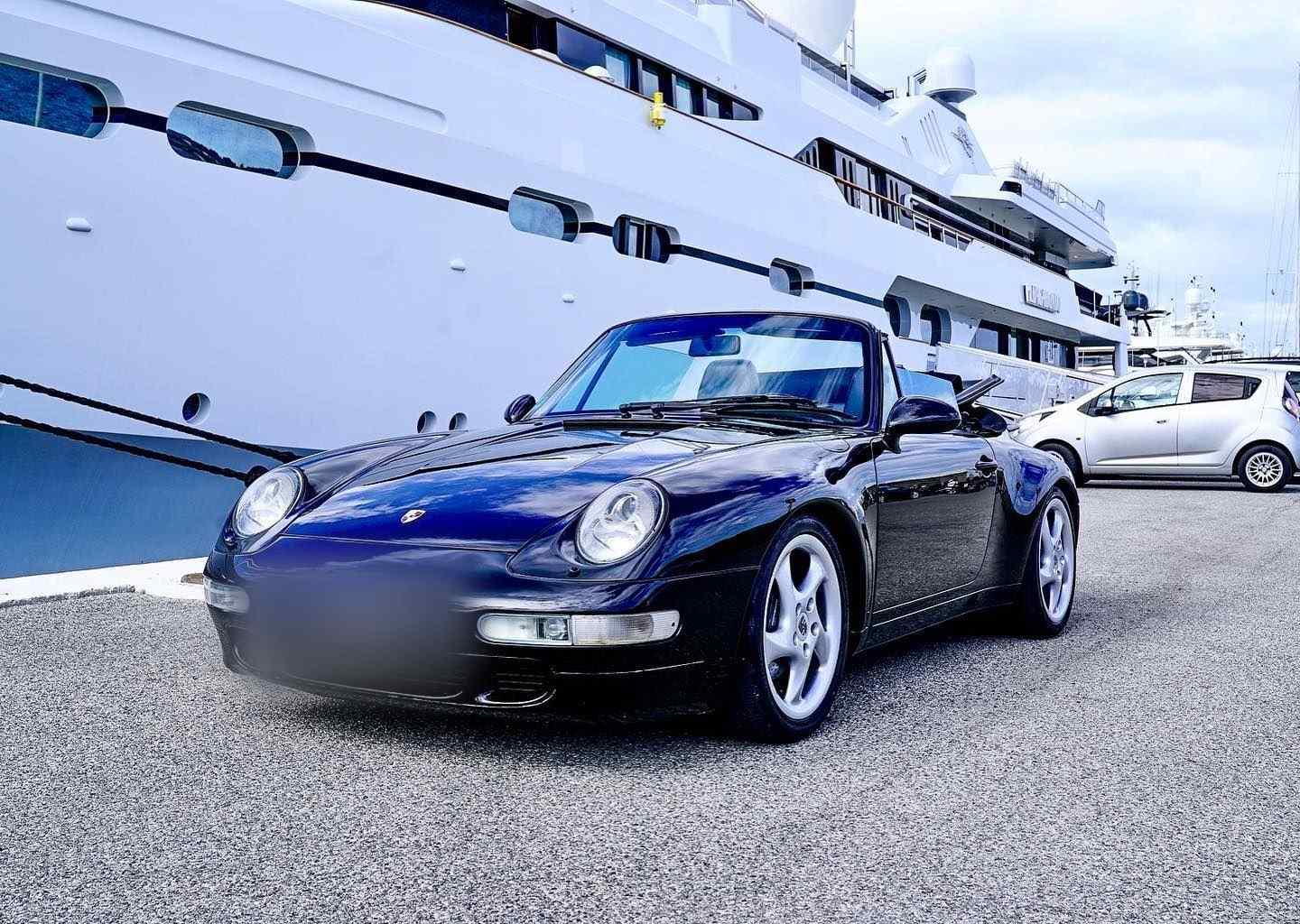
Upholstery, carried out entirely in the workshop, covers seats, door cards and headlining. On a Cabriolet, the hood and its electric mechanism are checked with care; a black 993 Cabriolet is among the cars photographed in the workshop.
What the workshop does for your 993
An independent workshop established in Mougins since 2017, Original Classic & Luxury Cars handles servicing, diagnostics, mechanical work, bodywork, upholstery and, where the car needs it, restoration of your 993. The quote is itemised, you receive photographs of the key stages, and no additional work is done without your approval.
The 993 succeeds the Porsche 964, whose engine it builds on. For a remote opinion, a quote from photos and videos is possible; for clients across Europe, transport is arranged on request. If you are looking for a car, see our Porsches for sale.