Which versions make up the early 911?
Shown at the Frankfurt Motor Show in 1963 as the 901, the car was renamed 911 before sales began, after Peugeot claimed three-digit names with a central zero. Production started in 1964. These long-bonnet cars, built until 1973, set out everything the line would keep: an air-cooled flat six hung behind the rear axle, a single overhead camshaft per bank driven by chain, dry-sump lubrication and a slim, light monocoque.
Its sibling, the 912, built from 1965 to 1969, uses the same shell with the 1.6-litre four-cylinder inherited from the Porsche 356. Its bodywork and trim are restored in exactly the same way.
- 1964–1968: two litres and the short wheelbase collectors call SWB; the 1967 model-year 911 S, the first Porsche on forged Fuchs wheels; 911 T and 911 L for the 1968 model year.
- 1969 model year: wheelbase lengthened by about 57 mm; Bosch mechanical fuel injection on the 911 E and 911 S, while the 911 T keeps carburettors.
- 1970 model year: capacity raised to 2.2 litres.
- 1972 model year: 2.4 litres and the 915 gearbox in place of the type 901; an oil filler flap on the right rear wing, for that year only.
- 1973: the end of the series, just before the impact-bumper cars of 1974, covered on our page about the Carrera RS 2.7 and G-series 911.
Why is the soft-window Targa so sought after?
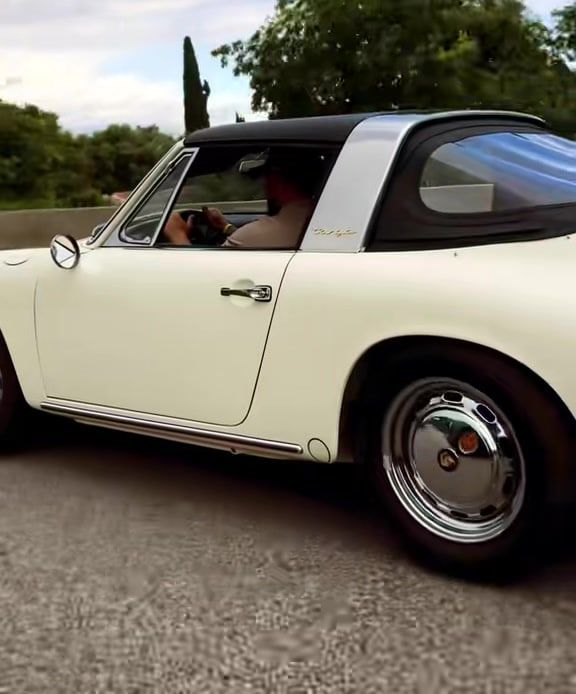
On sale from 1967, the first Targa combined a fixed brushed stainless roll hoop, a removable roof panel and a soft, removable rear window in clear plastic. Towards the end of the 1960s a fixed glass window took its place. Soft-window cars are therefore the rarest, and the most demanding to put right: the window, its fastenings and the hood are hard to reproduce faithfully, and keeping water out depends on seals fitted with real care.
Without a fixed roof, a Targa shell relies more heavily on its sills and on the feet of the hoop. Those are precisely the areas where rust weakens the structure, and where a poor earlier repair shows up as a body that flexes.
What should you check on a pre-1974 911?
These early shells do not yet have the full galvanising Porsche adopted later. More than fifty years on, the metal decides everything: an engine can always be rebuilt, whereas a rotten shell that has been dressed up calls for a great deal of work.
Mechanically, the inspection covers the timing chain tensioners, oil leaks, oil pressure and temperature, the gearbox and its synchromesh. On E and S models, the Bosch mechanical injection pump must be set up by experienced hands: out of adjustment, it makes a healthy engine run badly.
- sills, jacking points and floor pans, often patched in a hurry in the past
- front battery boxes and front torsion bar mounts, which carry the suspension
- wheel arches, windscreen pillars and the rear window surround
- on a Targa: the hoop, its feet and the sills
- matching chassis and engine numbers, and equipment consistent with the model year
- signs of earlier restorations: thick filler, visible welds, fresh paint over untreated steel
How does a classic Porsche 911 restoration proceed?
A full Porsche restoration begins with an inspection and an itemised estimate. The car is then dismantled, every part photographed and catalogued, and the shell is stripped to bare metal to reveal its true condition. Corroded panels are replaced with properly formed sections, the body geometry is checked, and only then come primer, paint and reassembly, as described on our Porsche bodywork and paint page.
The owner sets the direction: strict originality, with colour and trim correct to the period, or a personal interpretation in the spirit of the car. Photographs of each important stage are sent during the work, and nothing extra is undertaken without the owner’s agreement.
Engine, injection and gearbox: what does a rebuild involve?
A Porsche engine rebuild on a flat six of this period means complete dismantling, measuring every tolerance, inspecting cylinders, pistons, heads, camshafts and chains, then reassembly to the manufacturer’s specifications. On an injected 911, the mechanical pump and its linkage are checked and set up together with the engine, never in isolation.
The manual gearbox, type 901 and then 915 on the 2.4, is checked for synchromesh, bearings and shift mechanism. The 911 was also offered with Sportomatic, a semi-automatic transmission available from 1968, which is dealt with separately. Between projects, servicing follows the manufacturer’s schedule: oil suited to a dry-sump engine, level checked hot at idle, valve clearances, ignition, brakes and fluids.
Interior and trim: recovering the original feel
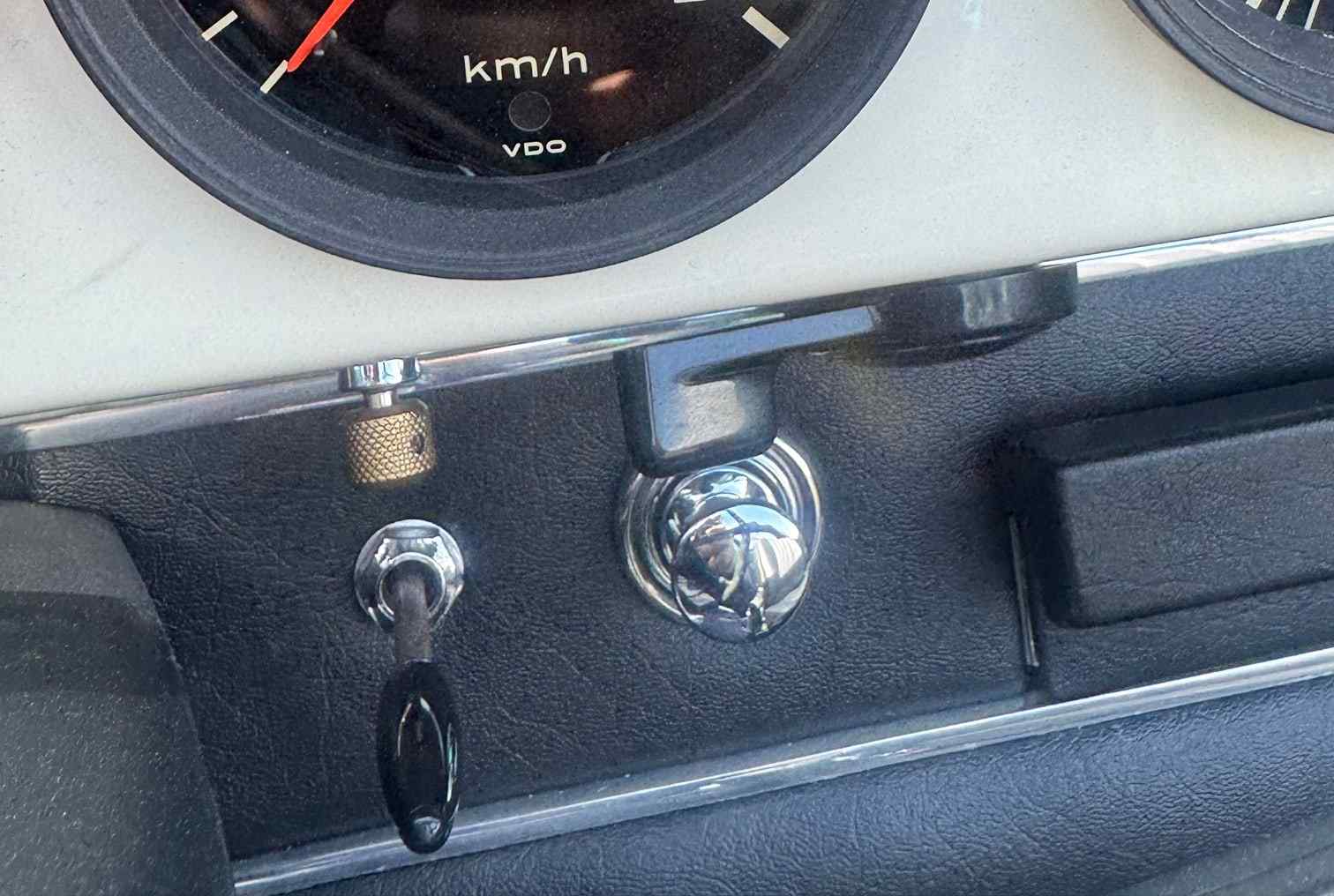
Early 911 cabins are restrained: thin-backed seats, period cloths and leatherette, including the Pepita houndstooth, loop-pile carpets and a dashboard with five round dials. Trim that is too modern or badly cut stands out at once on these cars.
Porsche upholstery is made entirely in our workshop: seat covers, door cards, headlining, Targa hood and carpets, either as a faithful reproduction or as an interpretation.
What the workshop does for an early 911
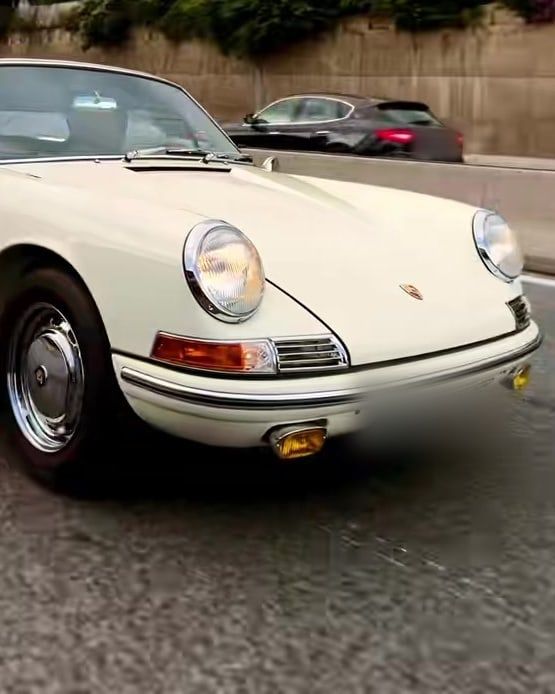
The workshop carried out the full restoration of a 1967 911 S soft-window Targa, two litres, in 2023 and 2024: shell blasted, panelwork, ivory paint, engine rebuilt and black trim. That project sums up what the series demands: a shell taken back to metal, a Targa structure repaired, a flat six rebuilt and an interior remade by hand.
Whether the car is on the Côte d’Azur or elsewhere in Europe, a first opinion is possible from photographs and video; transport of the car can be arranged, and a request for an estimate is all it takes to begin.