Why do Porsche brakes have such a reputation?
Porsche brakes owe their reputation to rare consistency: from its launch, the 911 stopped on four discs, and every generation has improved the endurance of the system as much as the power of the engine. A well-maintained Porsche should be able to brake hard, repeatedly, without the pedal growing longer.
Caliper colour is also a marker. Red identifies many of the sportier versions, yellow denotes PCCB carbon ceramic brakes, and white marks, on certain recent models such as the Cayenne, PSCB brakes with tungsten carbide coated cast-iron discs. When we refinish calipers, we keep to the original colour of the version, unless you decide otherwise.
Classic 911 brakes: calipers, servo, pipes
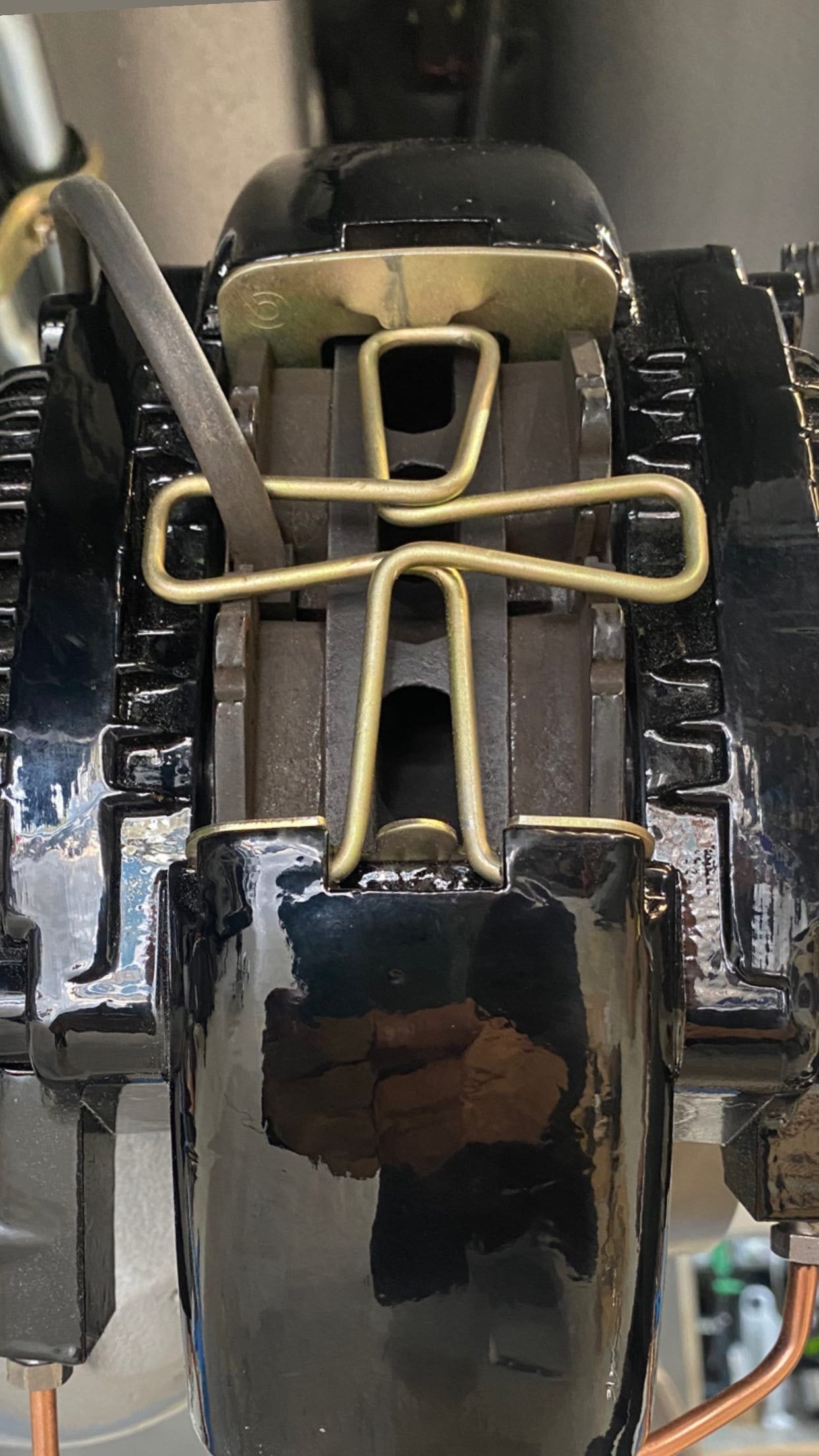
On an air-cooled 911, the ATE calipers, cast iron or light alloy depending on year and version, rebuild extremely well: strip-down, cleaning, pistons and seals, dust boots, paint, bleeding. Period calipers are kept whenever their bores allow; it is a matter of authenticity as much as of braking quality.
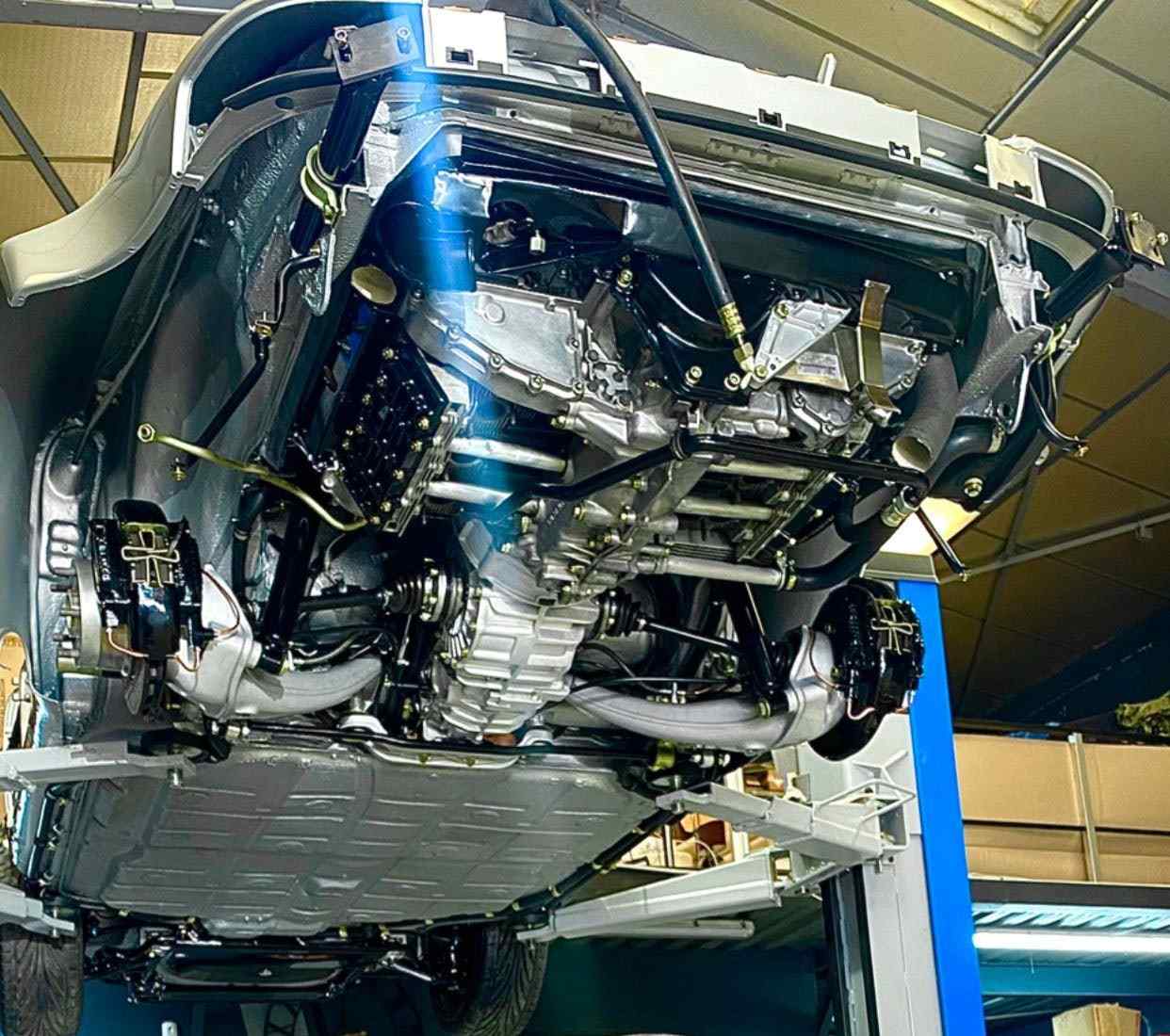
The earliest 911s have no brake servo; later generations gained one, whose diaphragm and valve are tested. The most common weakness lies elsewhere: the steel brake pipes running along the underside, exposed to water and road salt, corrode over the years. They are replaced, the flexible hoses with them, and the master cylinder is checked. On the 356, the drums of the early series and the discs of the 356 C each call for their own approach.
930 Turbo: stopping power to match the turbo
From 1978, the 3.3-litre Porsche 930 Turbo received four-piston calipers and ventilated, cross-drilled discs, a direct answer to the power of its turbocharged flat-six. These brakes deserve a careful overhaul: discs, calipers, pipes and fluid work as a whole.
On the 1989 930 Turbo Cabriolet restored in the workshop, the brakes and running gear were fully rebuilt during the six-month restoration, alongside the bodyshell, the engine and the G50 gearbox.
PCCB: inspect before replacing
Introduced in the early 2000s, Porsche Ceramic Composite Brakes, or PCCB, are now fitted as an option or as standard on many 911, Cayenne, Panamera, Macan and Taycan models. They are light, fade-resistant and long-lived on the road, but a PCCB disc is expensive to replace: an accurate diagnosis is always better than a precautionary replacement.
PCCB wear cannot be read from thickness as with an iron disc. It is assessed through a close visual inspection of edges, friction surfaces and holes, and by the measuring method Porsche specifies. The pads are specific, and wheels are fitted with care, because a knock can chip the disc. We explain what we find, with photographs, before proposing anything.
Modern Porsches: sensors, assistance and fluid
On the 996, 997, 991 and 992 as on the Cayenne, Panamera and Macan, brake servicing also involves electronics: pad wear sensors, ABS and stability control sensors and, on models so equipped, an electronic parking brake that is set to its service position with the diagnostic tool. The fluid is changed according to the manufacturer’s programme, like the rest of Porsche servicing.
Restore or upgrade the brakes on a Porsche?
Fitting calipers or discs from a later generation to an older 911 is a well-known practice. It needs thinking through: wheel clearance, front-to-rear balance, compliance, and the effect on the value of an original car. We study each project with you, in the spirit of the car, and keep the parts removed.
The workshop’s general approach, from drums to carbon ceramics, is described on the brakes and braking page; its approach to the marque as a whole, on the Porsche page.