What should be checked on classic car brakes?
A collector’s car that covers few miles rarely wears out its brakes: it lets them age. The fluid absorbs moisture, pistons seize in their bores, hoses swell from the inside and one wheel ends up dragging. Proper work on classic car brakes starts by finding the exact cause, before anything is replaced.
The inspection begins with a drive: pedal travel and firmness, whether the car pulls to one side, vibration, noise, a wheel running hotter than the others. The car then goes up on the lift and every part is checked, from the master cylinder to the friction material. This assessment fits naturally into the servicing of the car and leads to a quotation itemised line by line.
- Discs or drums: thickness, run-out and surface condition against the manufacturer’s figures
- Pads or shoes: wear, glazing, contaminated linings
- Calipers or wheel cylinders: pistons, seals, dust boots, leaks
- Flexible hoses, rigid pipes and unions: cracking, corrosion, weeping
- Master cylinder, servo, fluid and handbrake
Brake caliper refurbishment rather than replacement
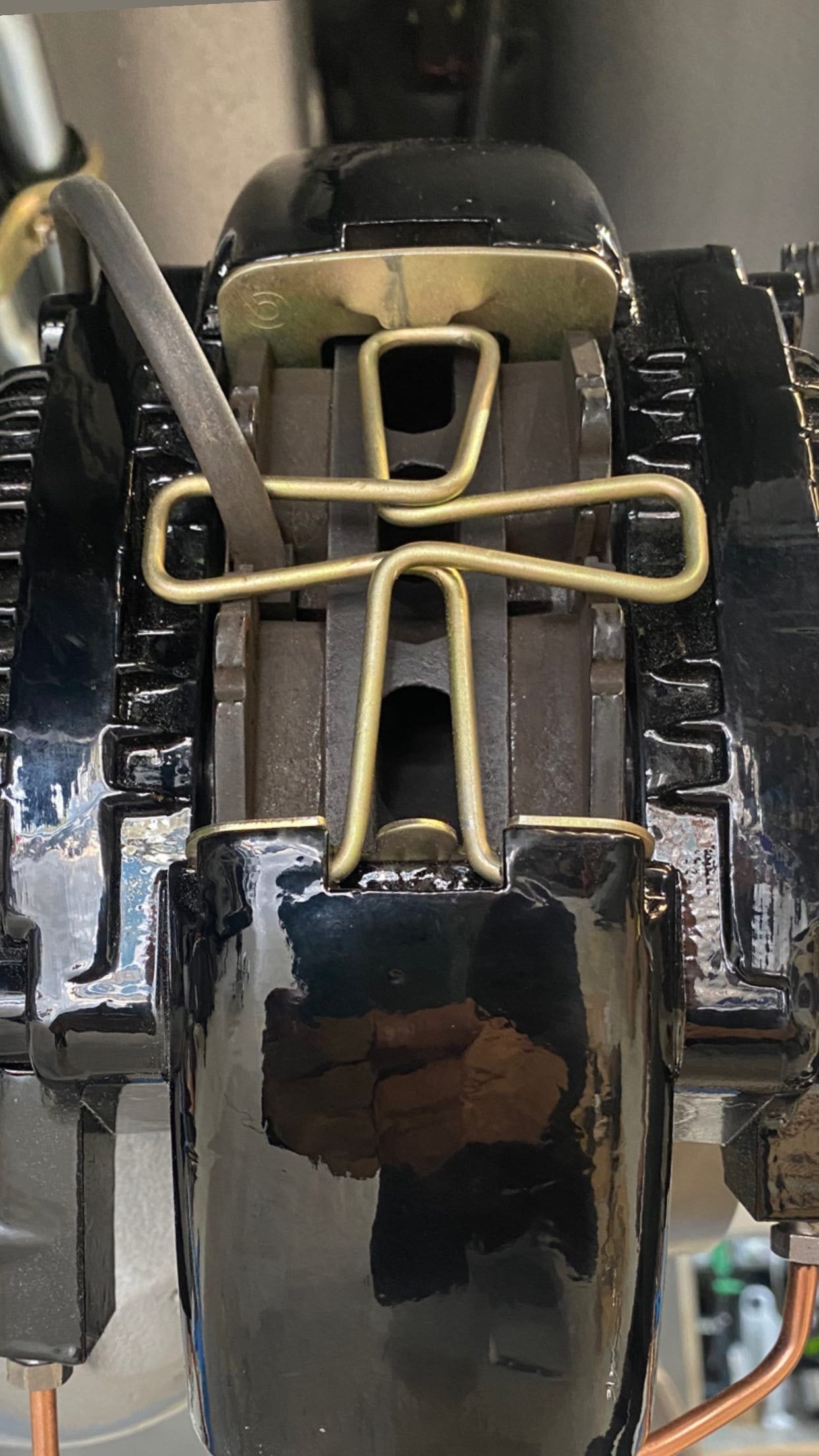
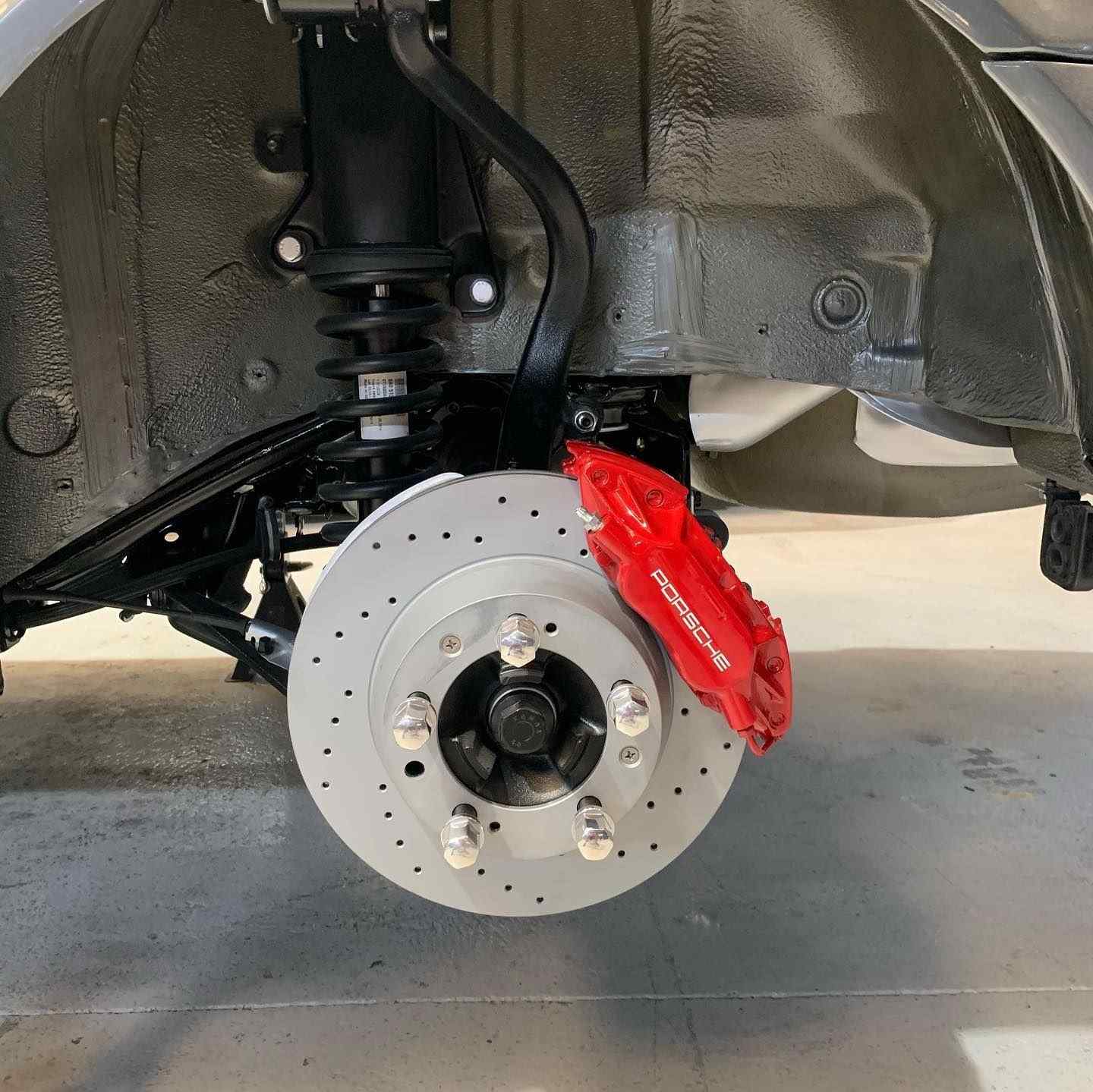
On a car of character, the original caliper is part of its history. While it is still sound, we refurbish it rather than replace it: removal, full strip-down, cleaning, inspection of the bores, pistons renewed where pitted, new seals and dust boots, then reassembly and bleeding. Calipers are repainted in the original colour or in the colour you choose.
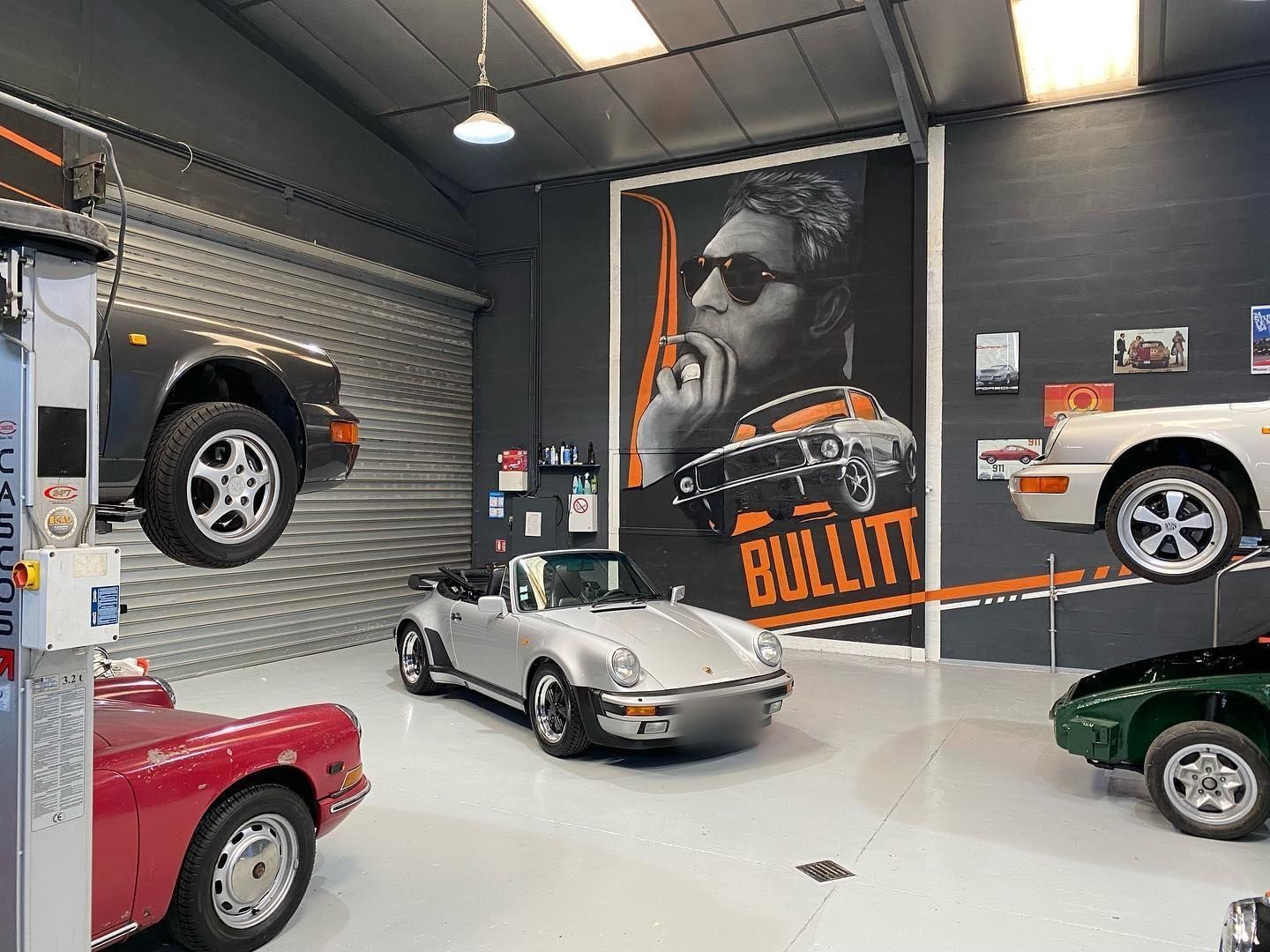
This is how the brakes and running gear of the 1989 Porsche 930 Turbo Cabriolet were rebuilt during its restoration. Where a caliper is cracked or too badly corroded, we offer an original, equivalent-quality or reconditioned part, with its provenance stated.
Fluid, hoses, pipes and master cylinder
Conventional glycol-based brake fluids are hygroscopic: they draw moisture from the air. Their boiling point drops and the water corrodes the system from within. The fluid is changed according to the manufacturer’s programme, using the fluid it specifies. Silicone fluid does not mix with glycol fluid, so on a car with an unknown history we first establish what the system contains.
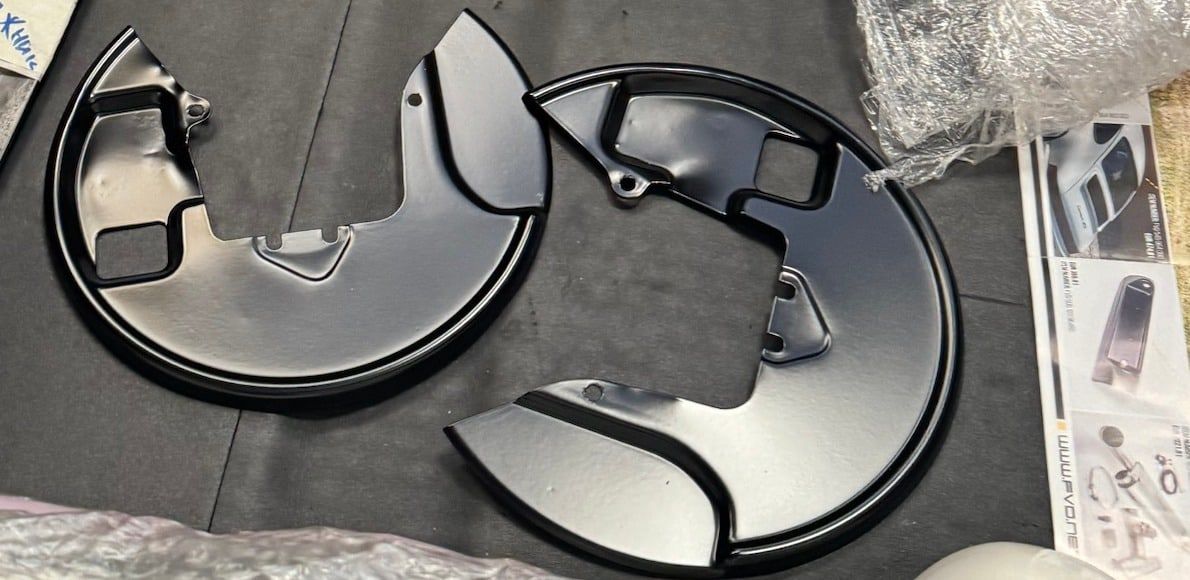
Rubber hoses age even when the car stands still; their inner lining can come away and act as a valve, leaving a caliper binding. The steel pipes of older cars rust beneath the body and are replaced, often in copper-nickel. The master cylinder, single-circuit on the oldest cars, and the vacuum servo are tested, rebuilt or replaced. On the Mercedes 220 SEb Cabriolet, the brake backing plates were renewed when the front suspension was overhauled.
Drum brakes: adjust, reline, preserve
Well adjusted, original drum brakes stop a car of the 1950s or 1960s honestly. We check the wheel cylinders, have the shoes relined, measure the drums for ovality and set the adjustment wheel by wheel, handbrake included. Old linings may contain asbestos and are removed with the appropriate precautions.
A disc conversion calls for caution. It changes the front-to-rear balance, affects the originality and value of the car, and may raise a question of compliance. We discuss it with you before any decision: very often, a properly rebuilt original system is entirely adequate for the way the car is used.
Carbon ceramic brakes: PCCB, CCM and others
Modern sports cars often use carbon ceramic discs: Porsche PCCB, Brembo CCM on Ferrari, carbon ceramic systems on Lamborghini, McLaren, Mercedes-AMG or Audi. They cope extremely well with heat and last a long time on the road, yet they remain sensitive to knocks, particularly when wheels are fitted, and cannot be assessed like a cast-iron disc.
Their wear is judged by a visual inspection of the surfaces and edges and by the measuring method laid down by the manufacturer. Because a replacement disc is costly, the diagnosis has to be precise: dedicated pads, sensors and the true condition of the disc are checked before anything is proposed. The specific case of Porsche brakes, PCCB included, has its own page.
ABS, bleeding and road test
On cars fitted with ABS, the wheel speed sensors, reluctor rings and hydraulic unit are checked, and the warning light is read with a diagnostic tool. Some bleeding procedures, and the electronic parking brake of recent models, require that tool. This work belongs with the workshop’s mechanical repairs.
Once the work is done, new pads are bedded in and the car is road-tested before it is handed back. The invoice lists every part and operation and becomes part of the service record. For an initial estimate, you can request a brake quotation from photographs and videos.