Porsche 930 Turbo: which versions, from 1975 to 1989?
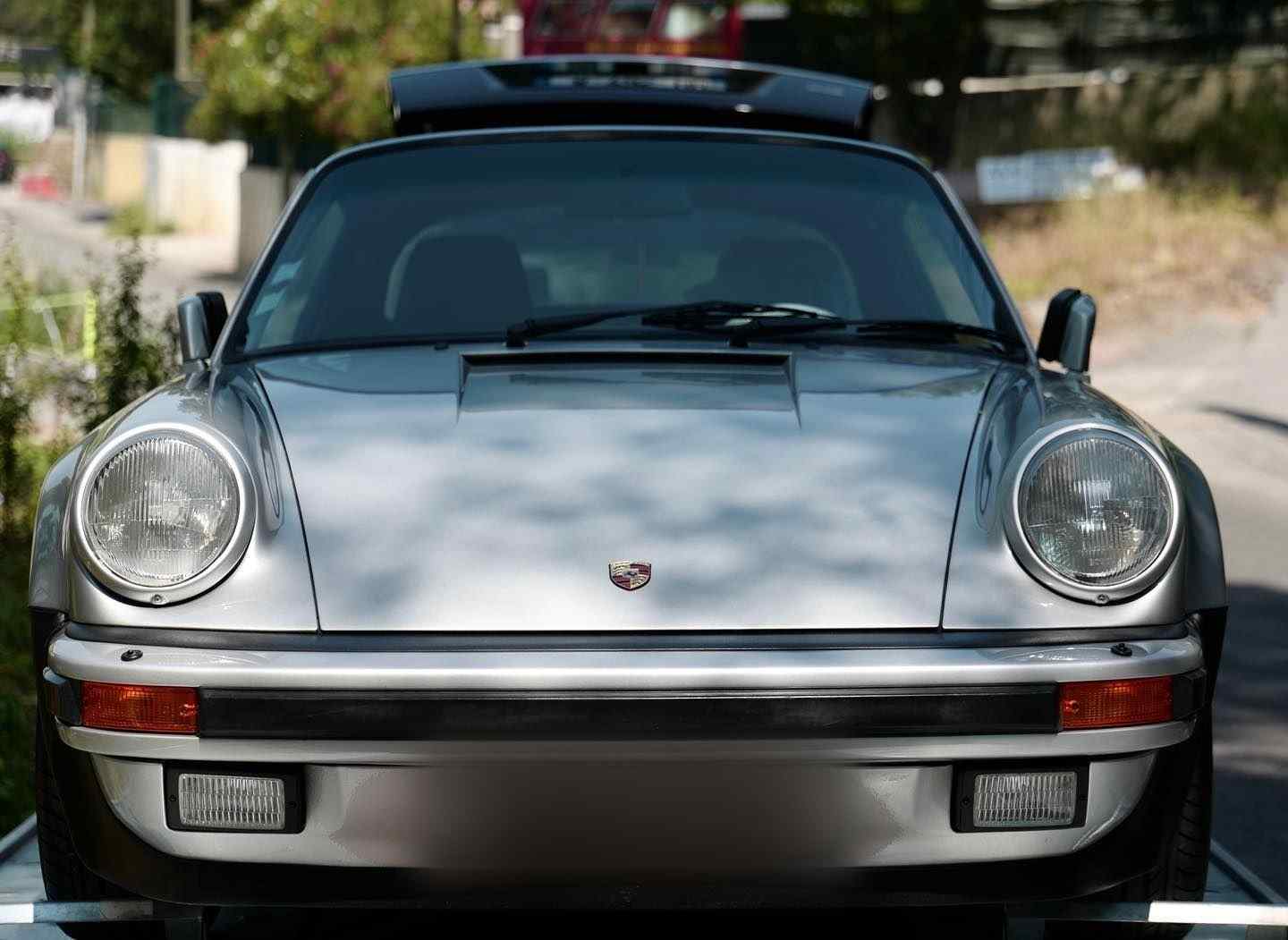
Shown at the 1974 Paris Motor Show and sold from the 1975 model year, the Porsche 930 Turbo was the first turbocharged production 911. Its 3-litre flat six used a single turbocharger and Bosch K-Jetronic mechanical injection; flared rear wings, wide tyres and the ‘whale tail’ spoiler set it apart at a glance.
For the 1978 model year, displacement grew to 3.3 litres and an air-to-air intercooler was fitted beneath a larger ‘tea tray’ spoiler. The brakes were uprated, with four-piston calipers and cross-drilled discs. The gearbox kept four speeds until 1988: the five-speed G50 arrived only for the final model year, 1989.
The coupé is the definitive body; the Targa and the Cabriolet joined the range in the late 1980s. There is also the ‘Flachbau’ or slant nose, with its sloping front and pop-up headlamps, first built to special order and later offered as an option. Its authenticity has to be checked car by car, against the factory documents.
What should you check on a 930 Turbo?
The 930 has a reputation as a demanding car, and most of its weak points come down to forced induction. Turbo lag, followed by a firm surge of boost, is part of its character. Boost that builds lazily, unevenly or too hard, on the other hand, points to a fault: a sticking or badly adjusted wastegate, a leak in the intake hoses, or a tired turbocharger.
When the car comes in, the workshop looks closely at:
- the turbocharger: shaft play, oil traces, smoke on start-up or on lifting off;
- the wastegate, boost control and, on the 3.3, the intercooler;
- the K-Jetronic injection: hot starting, idle, mixture;
- the dry-sump engine: oil leaks, hoses, oil cooler;
- the clutch and gearbox: synchromesh, linkage, noises;
- the body: galvanised from 1976, but an old repair can hide corrosion, around the flared wheel arches or the floor pans.
How is a Porsche 930 Turbo restored?
A 930 restoration starts with a thorough inspection of the car and an itemised quote. Depending on its condition and your wishes, the work ranges from targeted refurbishment to a full restoration: bare-metal body, metalwork, paint, engine and gearbox rebuild, brakes, running gear and trim.
That is the path taken by the 1989 930 Turbo Cabriolet restored in the workshop: a silver car with the G50 gearbox, fully stripped, the body taken back to bare metal, metalwork repaired, paint redone, engine and gearbox dismantled and rebuilt, brakes and running gear restored, over six months of work. Every stage is shown in pictures.
Faithfulness to the original is the default: colour, interior, Fuchs wheels, details specific to the model year. A more personal interpretation is possible if you wish; the classic Porsche restoration page describes the workshop’s method in detail.
Turbo engine, gearbox and brakes
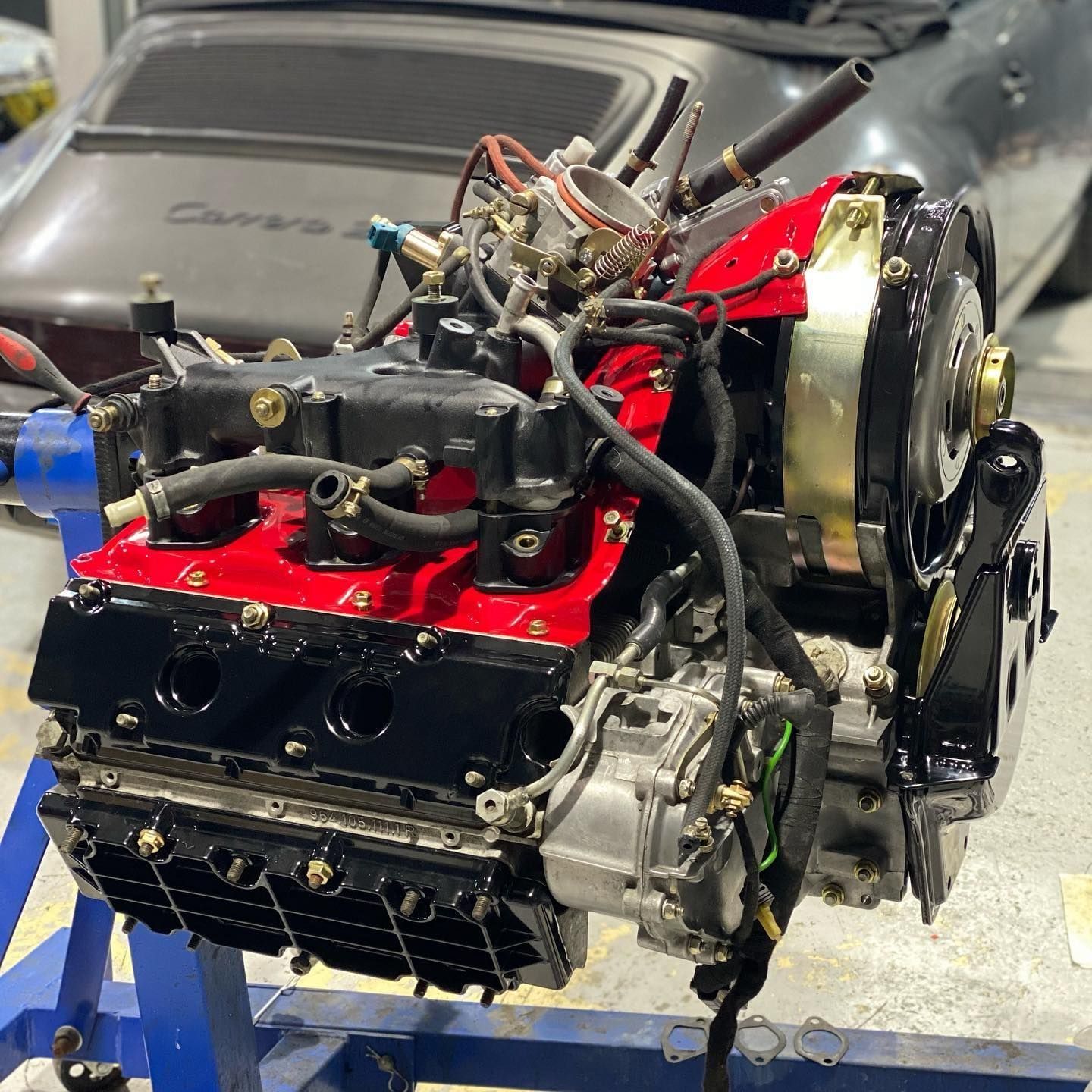
The 930’s turbocharged flat six is rebuilt as a whole: bottom end, barrels and pistons, cylinder heads, timing, turbocharger, wastegate, injection and ignition. A Porsche engine rebuild at the workshop means full dismantling, measuring every part and a quote based on what is actually found.
The original four-speed gearbox and the 1989 G50 are different designs, and each is overhauled to its own tolerances with its own parts. A Porsche gearbox overhaul covers synchros, bearings, differential and linkage. The brakes, worked hard by the car’s performance, are stripped, checked and refurbished: the Porsche brakes page sets out what is inspected.
Routine servicing follows the manufacturer’s programme: dry-sump oil change, checks on boost, ignition and leaks. After a long lay-up, the workshop makes sure oil is circulating properly before the engine is fired again.
Bodywork, paint and interior
The 930’s flared rear wings, spoiler and bumpers call for precise metalwork and paint: aligned panels, even shut lines, the colour matched to the identification plate and the car’s documents. On a Cabriolet, the hood, its mechanism and its sealing are dealt with alongside the body.
Upholstery is carried out entirely in the workshop: seats, door cards, carpets and headlining, in leather or cloth, true to the original or to your own choice.
What the workshop does for your 930
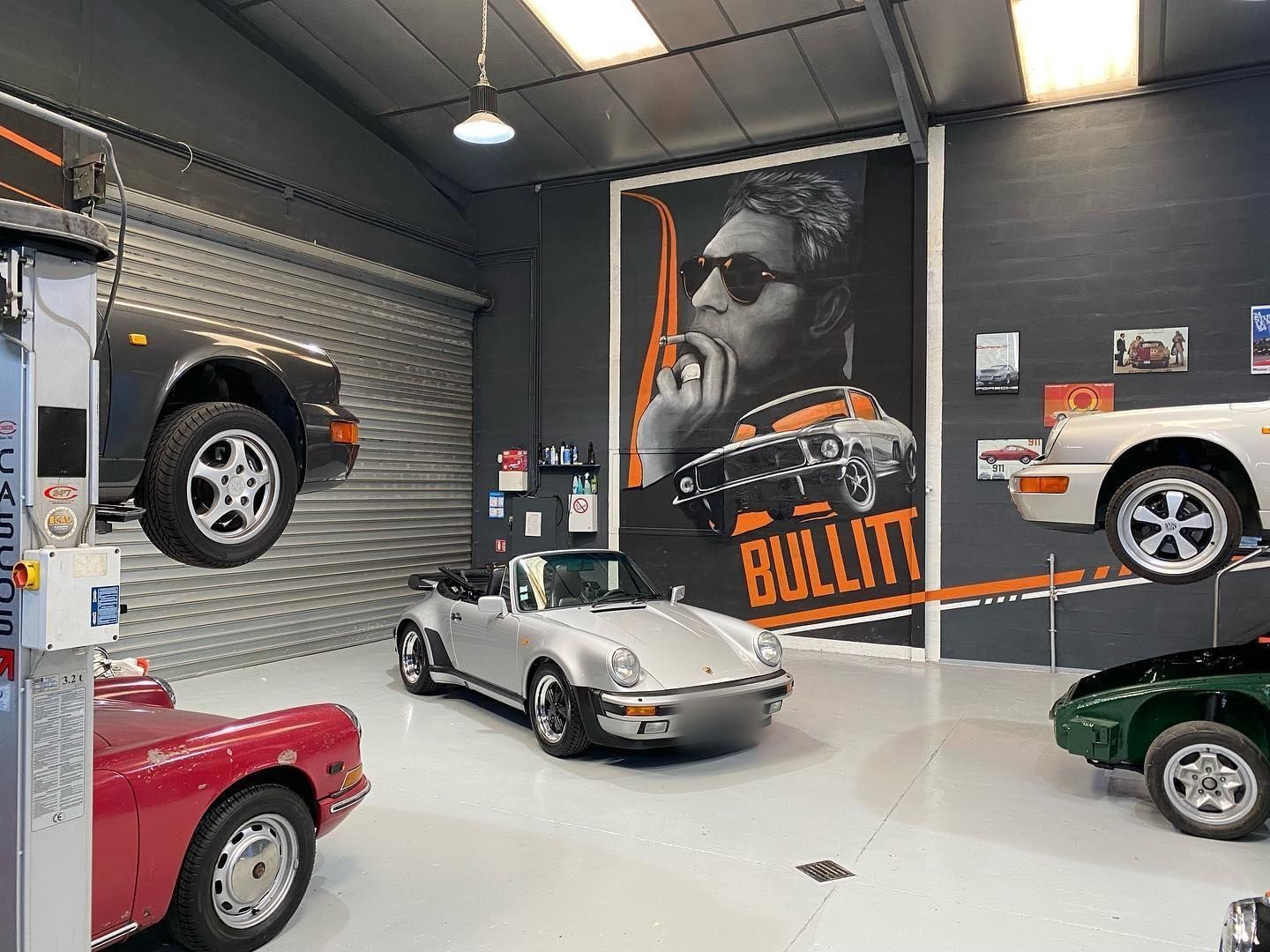
Original Classic & Luxury Cars is an independent workshop, established in Mougins on the Côte d’Azur since 2017. For a 930 Turbo it handles servicing, mechanical work, bodywork, upholstery and full restoration. A single team follows the car, you receive photographs of the key stages, no additional work is done without your approval, and the detailed invoice becomes part of the service history.
The 930 has a direct descendant: the Porsche 964, whose Turbo 3.3 carries over the engine of the last 930. For a first opinion, a quote from photos and videos can be given remotely; transport is arranged on request, in France and across Europe. If you are looking for a car, see our Porsches for sale.