From Series to Defender: sixty-eight years of separate chassis
The Land Rover was born in 1948, at Rover, as a simple, repairable off-road vehicle. The Series I, II, IIA and III followed one another until 1985: leaf springs, selectable four-wheel drive with a low range, and an aluminium-alloy body bolted to a steel chassis. Their mechanicals come apart with ordinary tools, which makes a full restoration possible part by part.
The One Ten arrived in 1983, followed by the Ninety in 1984: coil springs inherited from the Range Rover and permanent four-wheel drive with a lockable centre differential. The Defender name came in 1990; the 90, the 110 and the long 130 were built until 2016. The engines tell the story: four-cylinder petrol and diesel units, the Rover V8, then the 200Tdi, 300Tdi and five-cylinder Td5 turbodiesels, and finally the Ford-derived Puma. The Land Rover Defender page sets out what to look for on each.
Our workshop has trimmed a Defender in cognac leather, paired with teak. It shows the work of our upholstery department, carried out entirely in-house, on a vehicle built to work as much as to please.
Range Rover: five generations, from the Classic to the L460
Launched in 1970, the Range Rover created the luxury off-roader: a 3.5-litre aluminium Rover V8, coil springs, disc brakes on all four wheels and permanent four-wheel drive. At first a two-door, it gained four doors in 1981; the long-wheelbase LSE followed in 1992. Its particular traits are described on the Range Rover Classic page.
The P38, from 1994 to 2002, made air suspension standard and adopted 4.0 and 4.6-litre V8s as well as a BMW-sourced six-cylinder diesel. The L322, designed during the BMW years and sold from 2002 to 2012, gave up the separate chassis for a monocoque body. The L405, from 2012, moved to an all-aluminium structure; the L460, the fifth generation, adds plug-in hybrid versions.
Range Rover Sport, Velar, Evoque, Discovery and the new Defender
The range grew around the Range Rover: the Discovery in 1989, the Range Rover Sport in 2005, the Evoque in 2011 and the Velar in 2017. The Defender launched in 2020 breaks with its forebear: an aluminium monocoque, air or coil suspension depending on version, and electronics throughout. All of these models are welcome for Range Rover and Land Rover servicing, mechanical work, brakes and electronic diagnostics.
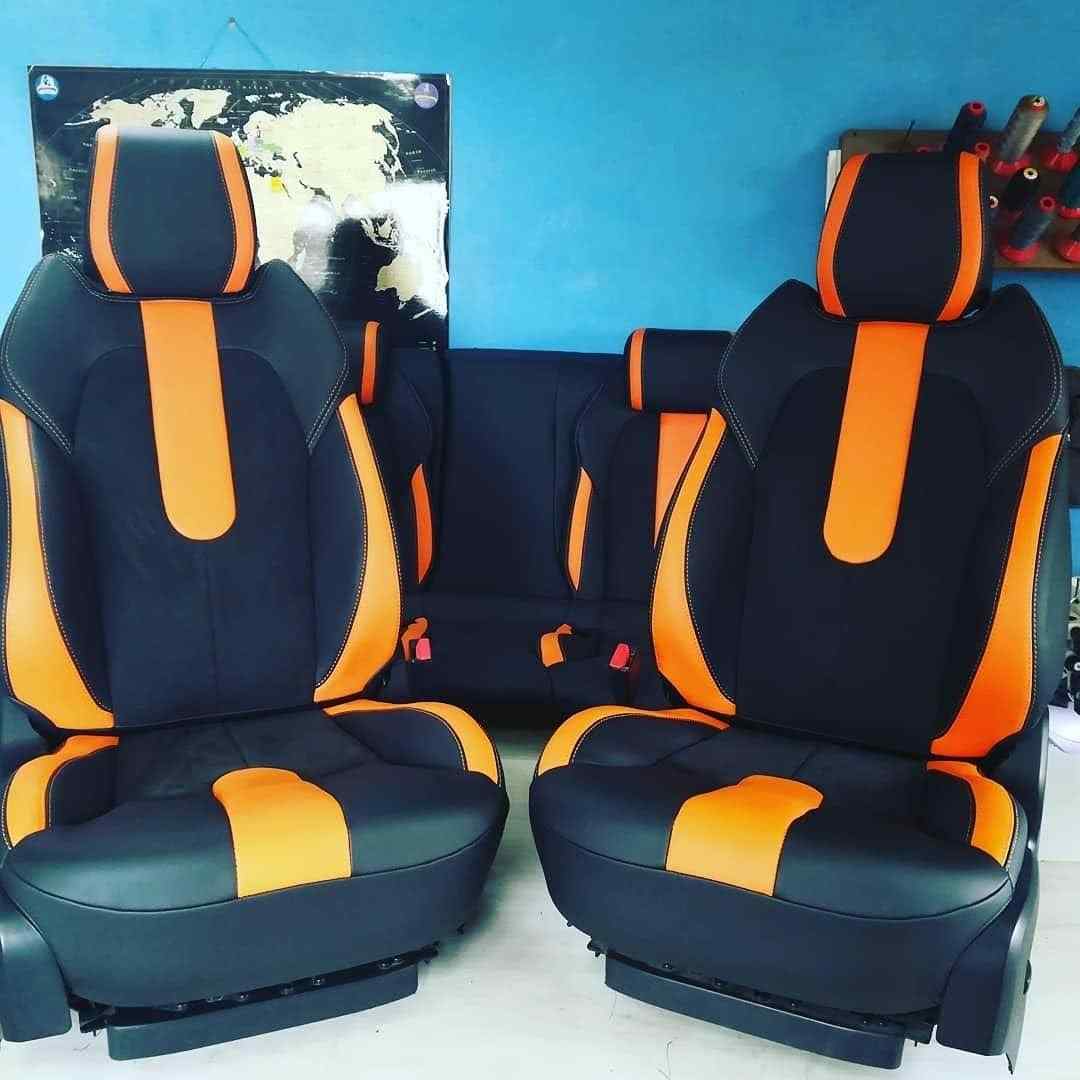
A recent cabin can be retrimmed too: the workshop has remade Range Rover seats in leather and Alcantara. Stitching, materials and colours are decided with you, before the estimate.
Restore to original, or build a Land Rover your way?
A Series or a Defender lends itself to both. An original restoration keeps the colour, the engine and the period equipment; a bespoke build keeps the spirit of the vehicle and revisits what matters day to day, from the trim to the brakes. The choice is yours, and it is settled before the estimate, item by item.
A modified Land Rover should not forget what it is for: it must still be able to climb, to tow and to be repaired far from a workshop. That principle guides every technical decision.