The W113 “Pagoda” SL: three versions, 1963 to 1971
Unveiled at the 1963 Geneva Motor Show, the 230 SL replaced both the 190 SL and the 300 SL. Its shortened platform came from the W111 saloon, along with that car’s rigid passenger cell and its front and rear crumple zones: the Pagoda is often described as the first sports car designed on that principle.
The nickname comes from the removable hardtop, its roof gently dished in the centre and raised at the edges like the roof of a pagoda, which also gives generous glass areas. A soft top, stowed under a lid behind the seats, completes it. The bonnet, boot lid and doors are aluminium on a steel body. Three engine sizes followed one another, all straight sixes fed by Bosch mechanical fuel injection with a six-plunger pump:
- 230 SL (1963–1967): 2.3 litres, disc brakes at the front and drums at the rear;
- 250 SL (1966–1967): 2.5 litres, seven-bearing crankshaft and disc brakes all round;
- 280 SL (1968–1971): 2.8 litres, the last and most widely produced of the three;
- from the 250 SL onwards, a California Coupé version, supplied with the hardtop only and a transverse rear bench in place of the soft top;
- gearboxes: a four-speed manual, a four-speed automatic and, more rarely, a ZF five-speed manual.
What should you check on a Mercedes Pagoda?
A Pagoda’s weaknesses come mostly from age and from past repairs. The workshop goes through them one by one before any estimate, in particular:
- rust in the steel body, to be looked for first in the floors, sills, wheel arches, jacking points and the soft-top well corners, wherever water collects;
- the aluminium panels, which must be repaired with methods suited to that metal, not treated like steel;
- the Bosch injection pump and its settings: poor cold starting, black smoke or flat pick-up can come from settings that have drifted as much as from a worn pump, and only a proper diagnosis decides;
- the single-joint swing axle at the rear, whose bushes and compensating spring govern the handling;
- the automatic gearbox, to be tried both cold and hot;
- the hardtop and the soft top: seals, glass, frame and catches, all hard to find when they are missing;
- the brightwork, rubbers and matching numbers, which weigh heavily in the car’s authenticity.
How is a Mercedes Pagoda restored?
A Pagoda restoration begins with a full inspection and an itemised estimate. On a tired car, it means taking the body back to bare metal: corrosion only really shows once the paint and old fillers are gone, and that is when the metalwork repairs are decided.
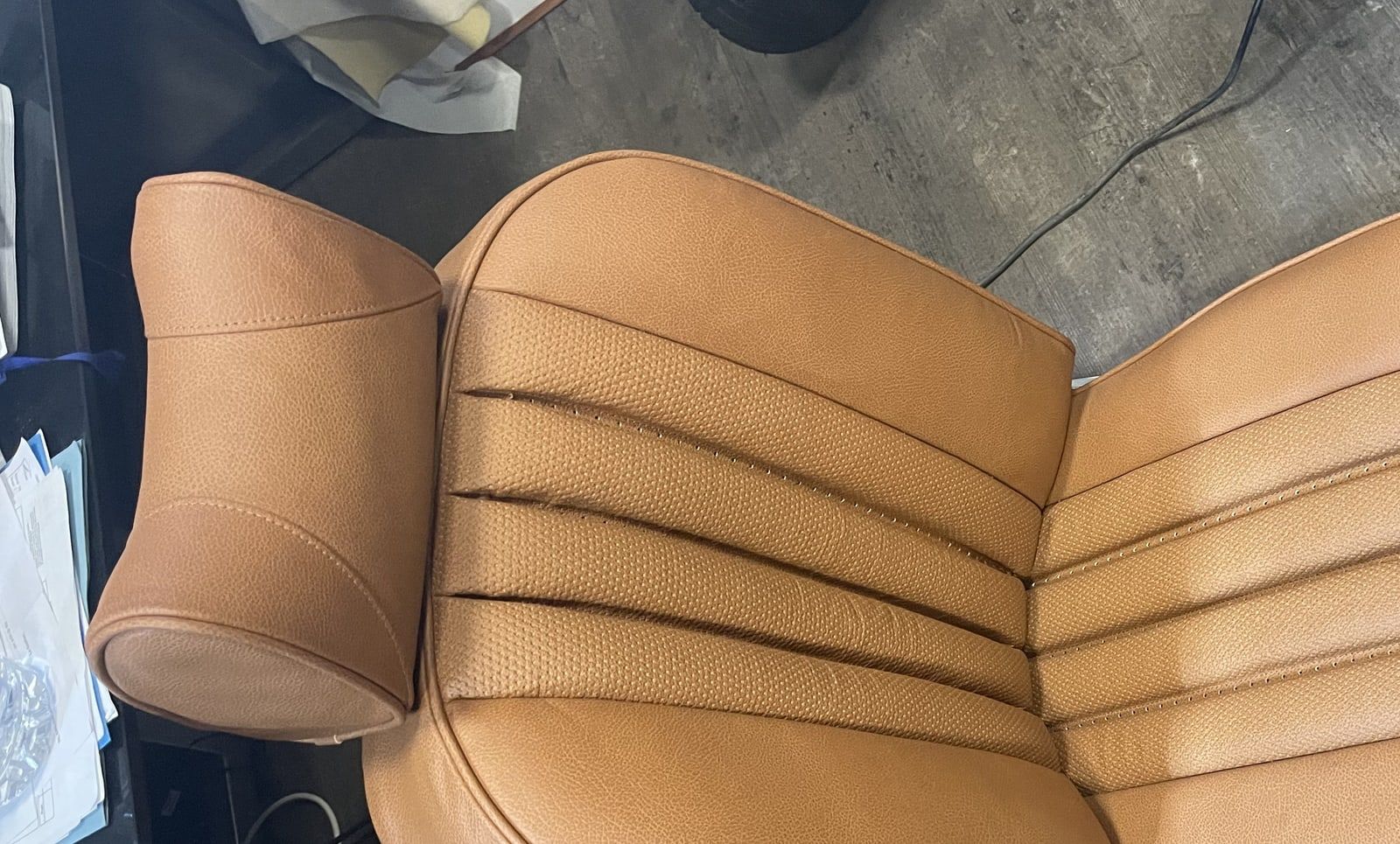
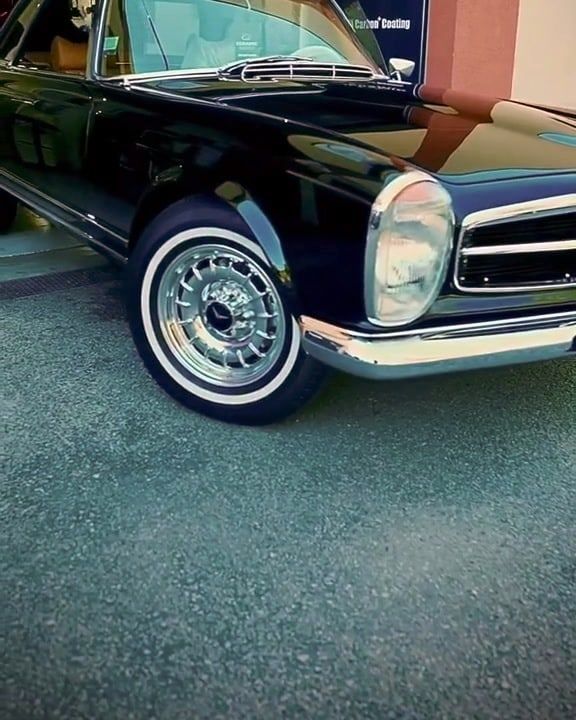
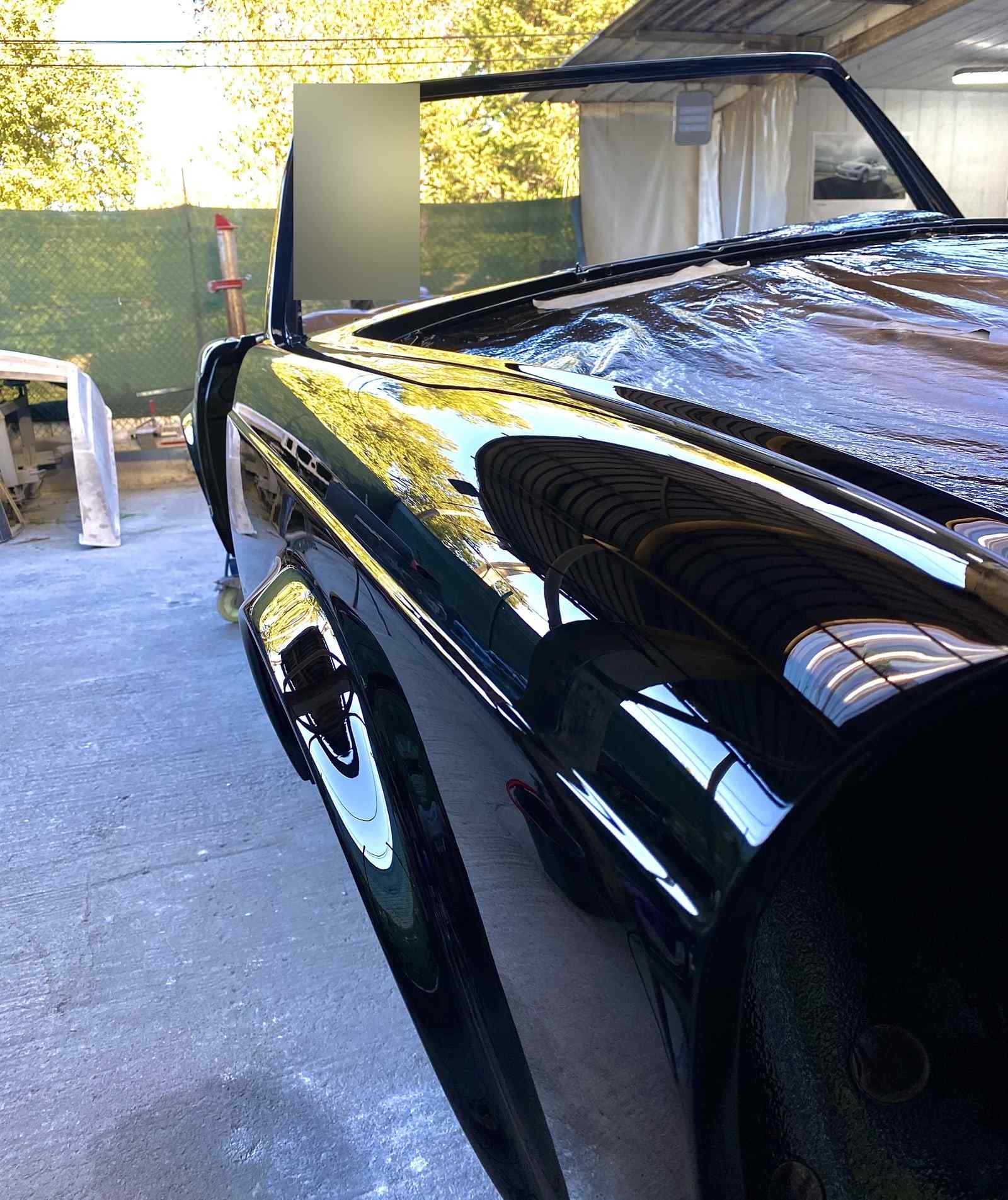
The black 280 SL Pagoda restored in the workshop shows the stages: an automatic car, its body stripped to bare metal, floor and tunnel primed with fresh beads of seam sealer, black lacquer laid down in the booth, the six-cylinder engine detailed, the front axle rebuilt, then an interior entirely redone in cognac leather, down to the trimmed boot.
Paintwork and the chrome plating of bumpers, hubcaps and trims are handled by the workshop, which agrees the target with you: strict fidelity to the original or a more personal interpretation. The general approach is set out on the classic Mercedes restoration page.
Bosch injection and mechanicals: servicing a 280 SL
The Pagoda’s straight six owes its smoothness to mechanical injection: the Bosch pump meters fuel to each cylinder according to engine speed and load. So the workshop checks ignition, compression, leaks and fuel supply first, then the injection settings, before concluding that a pump needs rebuilding.
Servicing follows the manufacturer’s programme: oil changes, the front suspension grease points, brakes and hoses, cooling, adjustments. A car that covers few miles still needs it, because seals, hoses and fuel age in the garage too. For regular care, see classic Mercedes servicing.
Interior, hardtop and bodywork of the W113
A Pagoda’s cabin is simple and clear: two seats, sometimes a transverse rear bench, a large thin-rimmed steering wheel. The seats can be redone in leather or in the original synthetic covering, with the pleats of the period; carpets, door cards, the hardtop headlining and the boot follow. Mercedes upholstery is carried out entirely in the workshop.
The soft top is remade on its frame and adjusted to close without force; the hardtop needs new seals and a precise fit to stay watertight. On the body, panel gaps, bumper alignment and the quality of the chrome make the difference between a decent Pagoda and a right one.
What the workshop does for a Pagoda
Based in Mougins, on the Côte d’Azur, since 2017, the independent Original Classic & Luxury Cars workshop handles servicing, mechanical work, bodywork, upholstery and full restoration of the W113 SL. You receive photographs of the key stages, and nothing is done without your approval.
The Pagoda has two elder sisters, the Mercedes 190 SL and the Mercedes 300 SL, each with its own page. For a first opinion, a quote from photos and videos can be given remotely.