Mercedes upholstery: what the workshop does
Mercedes upholstery is made entirely in our workshop: seats and rear benches, door cards, dashboard, centre console, headlining, carpets, soft top, hardtop lining and boot. Each old part is removed and recorded before it is replaced: it becomes the pattern, and its seams show how the factory put it together.
To recover the original interior, we start from what the car has kept, often an area hidden from the light under a seat or behind a trim panel, and, where it exists, from the car’s original data card (the ‘Datenkarte’), which lists its paint and upholstery codes. The general method, from foam to stitching, is set out on our car upholstery page; here we focus on what is specific to Mercedes-Benz.
Leather, MB-Tex or velour: what was the original material?
A classic Mercedes is not necessarily all leather. Alongside leather, the company long offered its own leatherette, MB-Tex, known for being almost indestructible: it is found in many W123s, W124s and R107 SLs. It wears so well that it is often worth keeping; when it finally splits along the seams or the bolsters, we look for a material whose grain, thickness and colour come close to it.
Velour and period cloths dress many saloons and coupés of the 1970s and 1980s, from the W123 to the W126. Their pattern, the width of the ribs and the balance between cushion, backrest and bolsters are recorded before cutting. Moving from MB-Tex or velour to leather remains possible if you wish: we then keep a record of the original specification, which belongs to the car’s history.
Pagoda and R107 seats: getting the pleats right
On a W113 Pagoda as on an R107 SL, the character of the seats lies in their sewn pleats: their number, width and depth make the difference between correct upholstery and an approximation. They are measured on the original covers, then reproduced over rebuilt foam so that the seat keeps its support. Some Pagodas also have a small transverse rear seat, which is trimmed with the rest of the cabin.
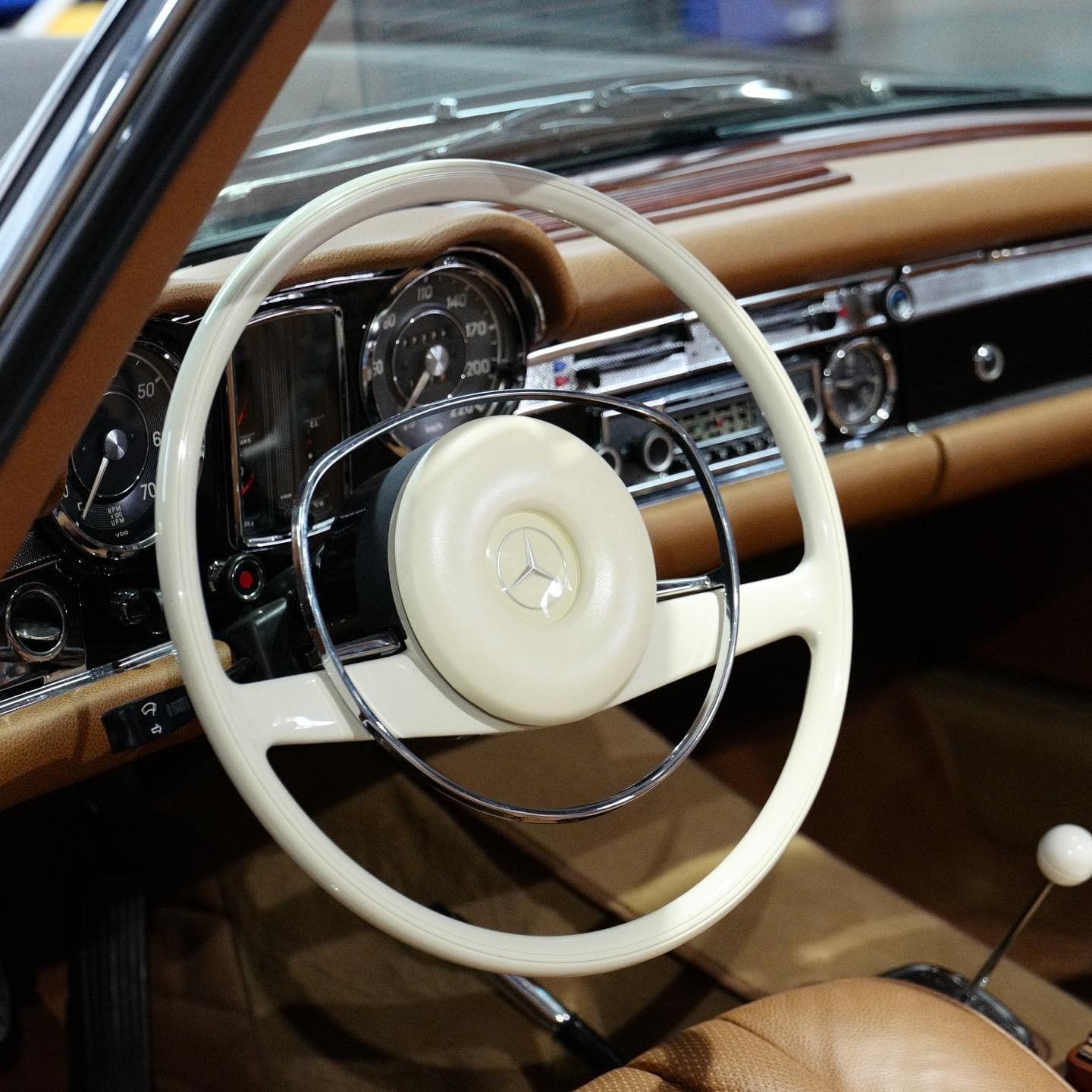
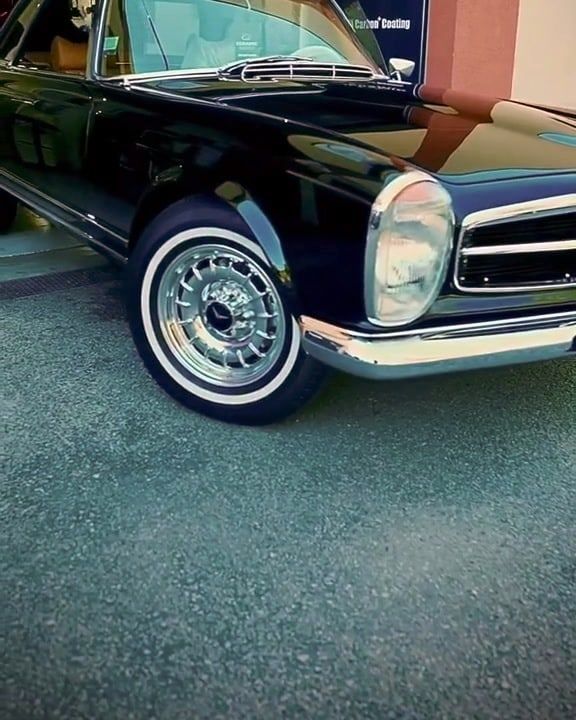
The Pagoda 280 SL handled by our workshop is an example: seats in pleated cognac leather, door cards, a leather-covered dashboard and a trimmed boot in the same hide. On many R107s, it is the padded dashboard top that cracks in the sun; it is re-covered or replaced depending on its condition. The model is described in more detail on our Mercedes Pagoda W113 page.
Soft tops, hardtops and carpets of open Mercedes
On the Pagoda, the soft top folds away under a lid behind the seats, and the hardtop with its dished roof, which gave the car its nickname, has its own inner lining. The R107 stows its hood under a body-coloured cover. Before fitting a new soft top, in canvas or vinyl according to the original, we check the frame, its joints and its seals: new fabric on a tired frame will never sit right.
The large cabriolets of the 1950s and 1960s are another exercise. On the 220 SEb Cabriolet restored in our workshop, the rear bench and front seats were redone in pleated red leather, facing a dashboard lacquered in red. Carpets follow the same logic: colour matched to the interior code, bound edges, cut-outs fitted around the seat runners and the tunnel.
Wood trim, best restored with the upholstery
Wood is part of the Mercedes cabin: zebrano or burr walnut depending on the model and year, on the dashboard, the console or the door cards. Over time the lacquer crazes, yellows or lifts, and the veneer can come away at the corners.
Since the wood trim comes out at the same time as the upholstery, its refurbishment is arranged together with the trim work: this avoids dismantling the cabin twice and lets us match the tone and gloss of the wood to the leather. For a car taken back to the bare shell, see also our Mercedes-Benz restoration page.
G-Class and recent AMG: leather, contrast stitching and airbags
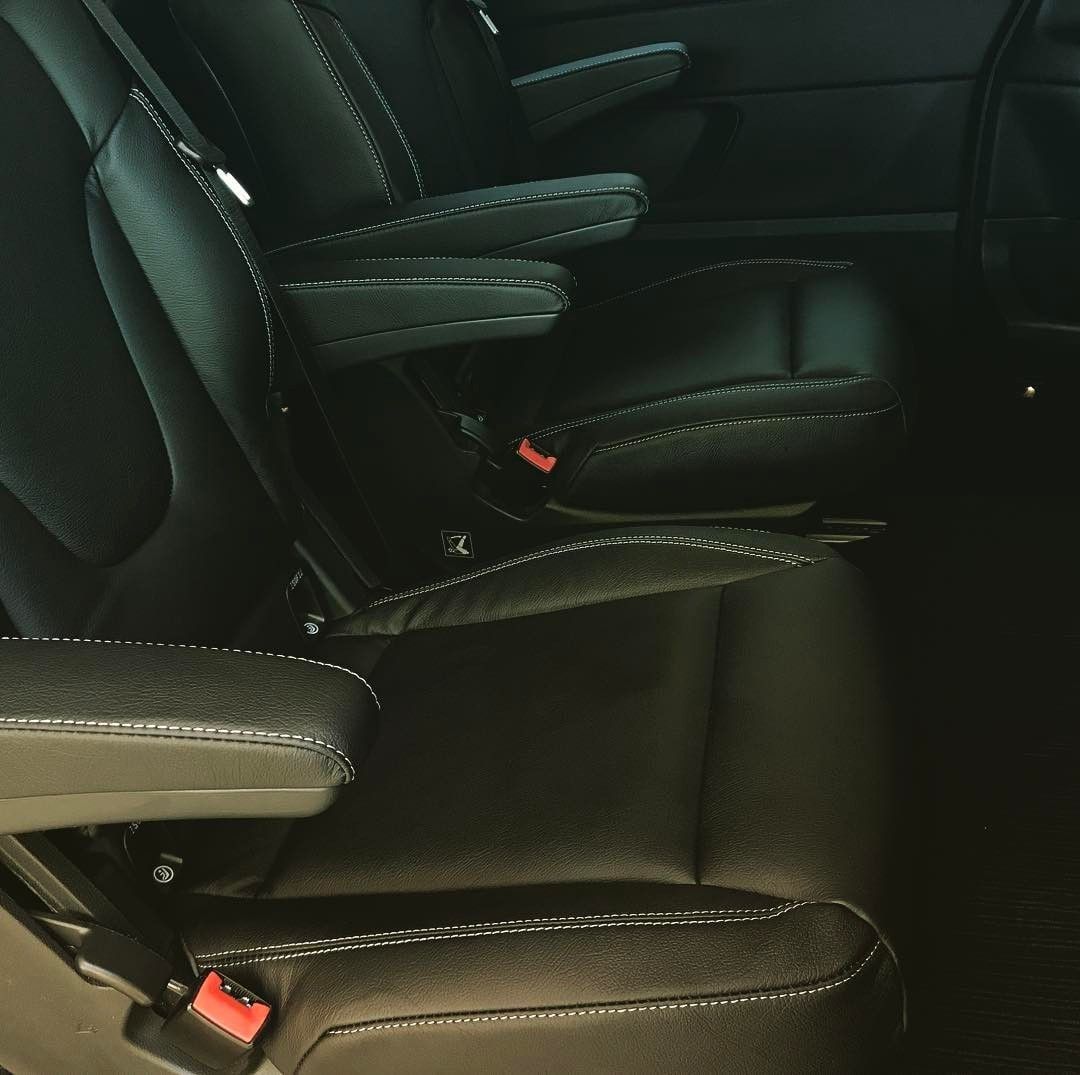
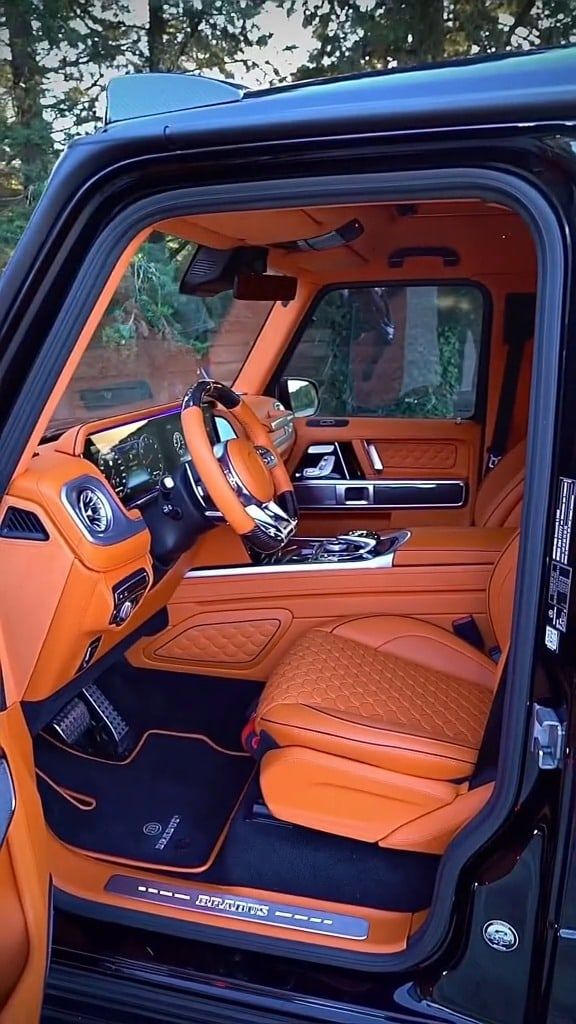
Recent Mercedes call for a different kind of care. A G-Class received an orange leather cabin and steering wheel in our workshop, and Mercedes-Benz seats have also been redone in black leather. On these cars the details are chosen together: stitching colour, piping, perforation, quilting, in the spirit of the designo range or departing from it, as you prefer.
Modern seats often contain a side airbag, occupancy sensors, heating, ventilation or massage. These are removed and refitted with care, and the seam designed for the airbag to deploy is reproduced exactly. The G-Class W460 and W463 and everything the workshop does on the marque are presented on our Mercedes-Benz page.